

Day 8 moved from 3,700-year-old stilt houses to a 15-year-old waiter planning his future — and in between, the marble head of a god who was stolen, auctioned in London, and brought home by two Albanian footballers. Tirana keeps surprising me, not with what’s polished and curated, but with what’s half-labelled and hiding in plain sight.
👁 Vista — Muzeu Arkeologjik
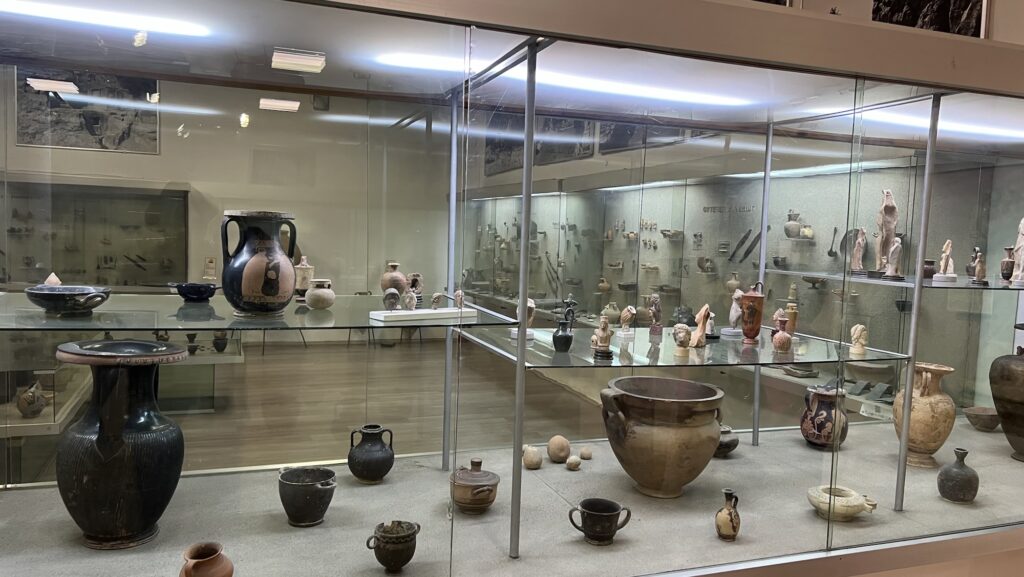
At the Akademia e Shkencave e Shqipërisë (Academy of Sciences of Albania), the Muzeu Arkeologjik is a small facility packed with history. Objects here go back to 3,700 years B.C. — and yet the museum could use a more detailed guide. Many artefacts don’t have descriptions. Many are simply grouped into eras. But the things themselves are staggering: Roman, Bronze Age, Copper Age, and long before. In a way, the sparseness of the labels works — you lean closer. You wonder harder. You fill the gaps yourself.
👁 Vista — Head of Zeus, 4th Century BC
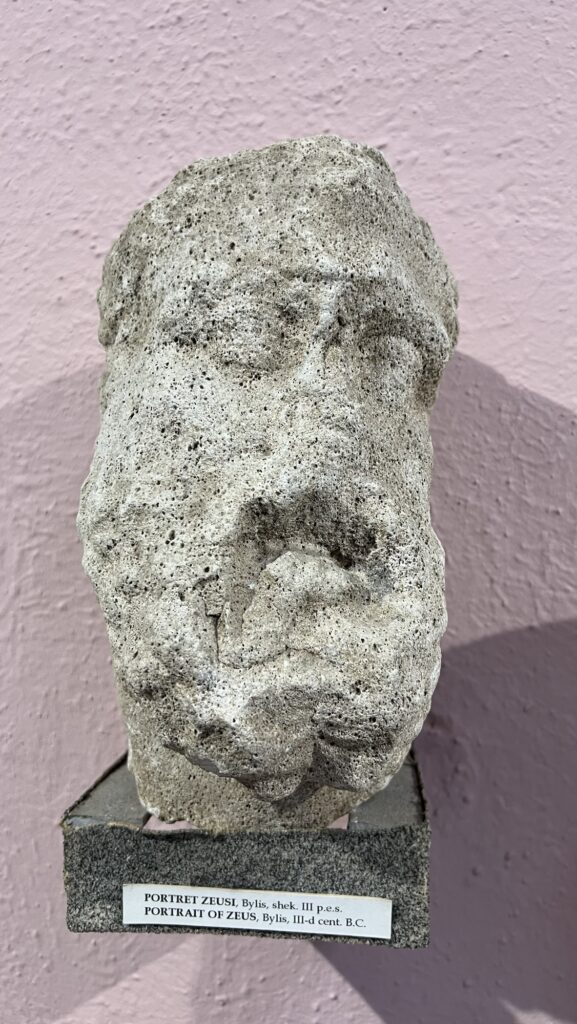
The star of the collection is the Head of Zeus, 4th century BC, from Butrint. Zeus is the supreme god, from which emanates order and justice on earth. Discovered in 1932 by the Italian archaeologist Luigi Maria Ugolini during excavations at the ancient theatre of Butrint. Zeus is accompanied by the scepter — a sign of patriarchal power — and spears. In other depictions, Zeus appears armed with lightning on the right arm while the left is stretched forward holding an eagle, the emblem of his royal authority.
And then the story takes a turn worthy of a heist film.
In 1991, the Head of Zeus was stolen from the National Museum of Butrint. Collector Massimo Rossi bought it, according to all rules, at an antiquarian auction at Christie’s in London. On 15 May 2009, after being purchased by Albanian footballers Igli Tare and Lorik Cana, one of the rarest archaeological objects in the country was returned to its homeland after 18 years.
Two national-team footballers bought back the head of a god at a London auction house and brought it home. That’s not museum copy — that’s a movie waiting to be made.
👁 Vista — Palafitte Construction, Copper Age (3,700–3,100 BC)
Characteristic of the Copper Age were palafitte constructions — stilt houses built over water. This settlement was discovered in 1946, after the swamp of Maliq in Korça was drained. Huts were built over hundreds of oak pillars driven into the water, on a floor of rods linked together horizontally and worked with mud on both sides — inside and out. The site yielded working tools made of flint, bone, and horn, in a great variety of forms.

3,700 years before Christ. People were building houses on stilts over an Albanian swamp, fishing and farming and shaping tools from bone. The museum doesn’t make a big deal of this. It just puts the objects in a case and lets you do the math.
Recent news adds another layer: the oldest European settlement has been discovered in Lin, Albania — a site now submerged underwater. I have a planned trip that will take me to Lake Ohrid, but sadly not to Lin. The ancient past keeps surfacing here, literally and figuratively, and there’s never enough time to see it all.
👁 Vista — Ismail Qemali Park and the Bunker Domes
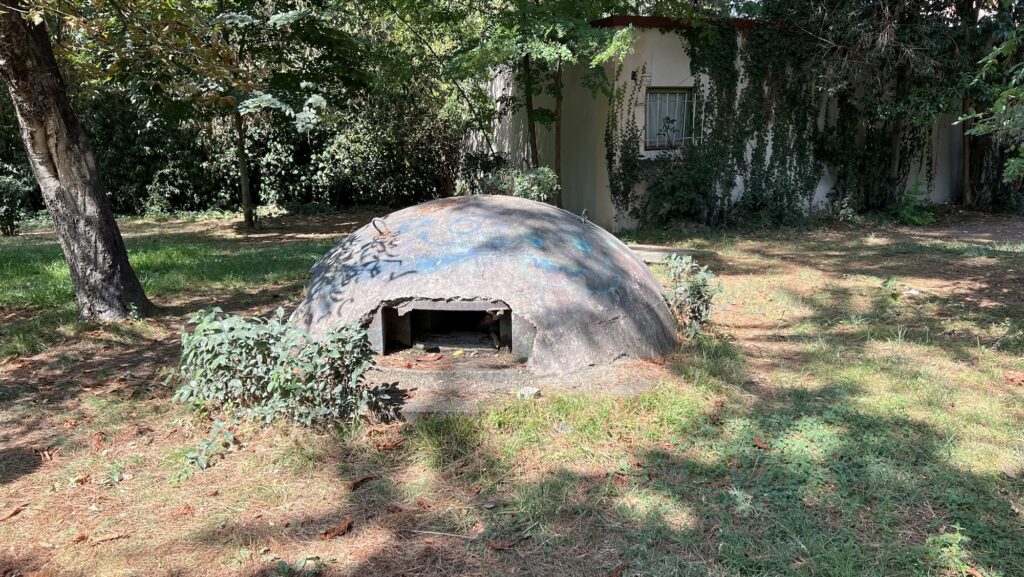
A walk through Ismail Qemali Park to see the bunker domes — one of Albania’s most visible architectural legacies of the communist era. Next to the park stands Mehmet Shehu’s former villa, complete with statues of Lenin. Shehu was Enver Hoxha’s right-hand man for decades, until 1981 when he was accused of being a double agent. He was found dead shortly after — officially a suicide. The villa remains, Lenin and all, a silent witness to the purges it outlived.

🧭 Wander — The 15-Year-Old Waiter at Watami
Dinner was at Watami Tirana, a highly rated sushi restaurant. The salmon and tuna rolls were tasty but a tad too salty — a small flaw in what was otherwise a well-prepared meal. But the dinner wasn’t the prize.
The prize was a long discussion with the 15-year-old waiter.
He aspires to go to university and better himself through education — leave Albania, work overseas for a few years to earn money, then return to help the family business and his younger siblings. That’s not a dream. That’s a strategic plan with a timeline.
He often works until 3 am for another restaurant when he’s not at Watami. He explains that Albania is a good country but with some serious flaws in trust, capital, and government support. A very astute young man for his age. I advised him to focus on his leadership qualities, given he already has long-term strategic planning down. He’s 15. He works two jobs. He has a plan to leave, earn, and return. I met him because I ordered a salmon roll. These are the conversations that never appear in guidebooks — and they’re the ones that tell you what a country really is.

I have an early all-day trip planned for tomorrow, so I called the evening early. But the young waiter stayed with me. He and the Head of Zeus, in their own ways, are telling the same story: things leave Albania, and if the country is lucky — if the right people care enough — they come back.
By the Numbers
| Item | Amount (EUR) |
|---|---|
| Muzeu Arkeologjik — entry | €4.31 |
| Watami Tirana — salmon + tuna sushi rolls | €23.71 |
| Day Total | €28.02 |
3,700 BC to 2009 AD, a marble god who took 18 years to come home, and a 15-year-old who’s already planning his return before he’s even left. Some days the museum is the main event. Other days, the 15-year-old waiter at the sushi restaurant teaches you more about a country than all the artefacts combined.
Leave a Reply