
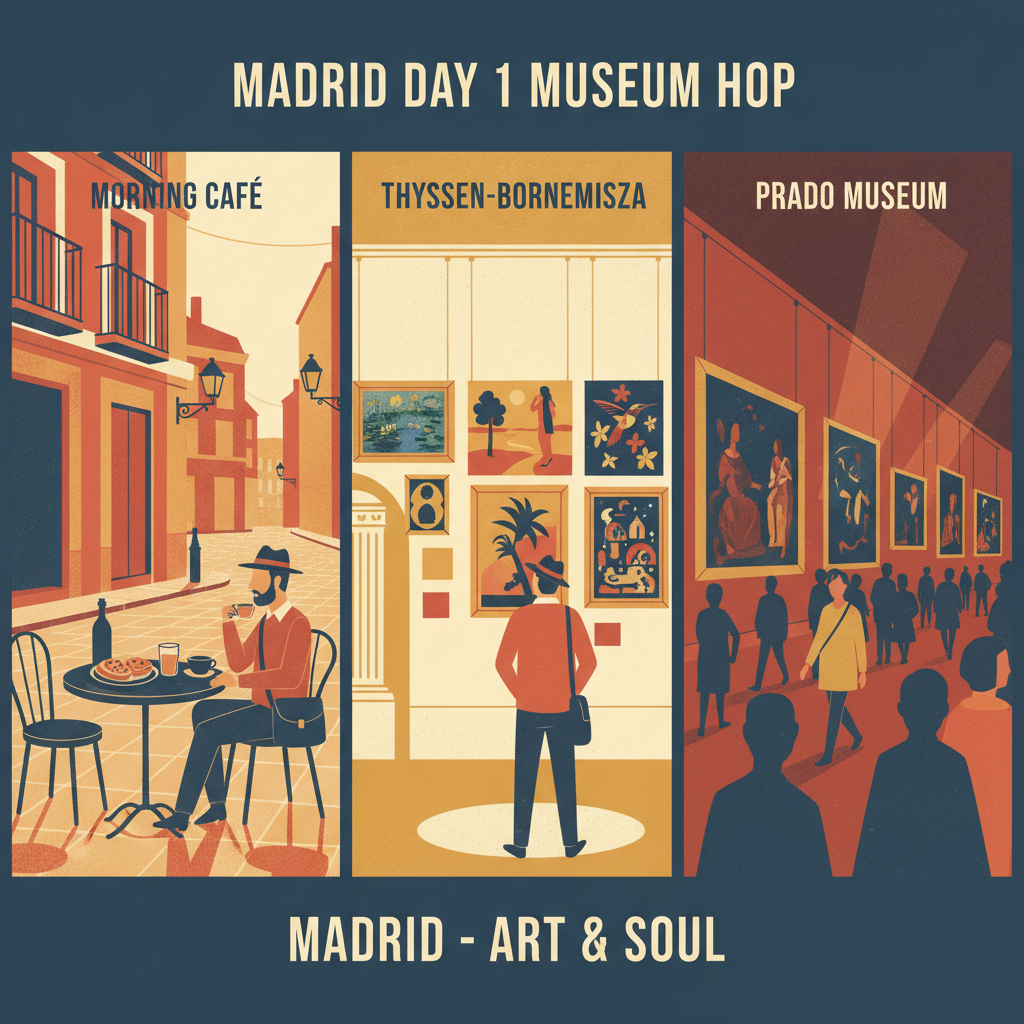
Madrid. Day 1. The Spanish capital, and I came ready to see art — a lot of it.
First stop: breakfast at a nearby coffee shop. Nothing fancy — toast, coffee, and orange juice (€7.0). The Spanish breakfast is simple, efficient, and designed to get you out the door and into the day.
Second stop: the Tourist Information booth in Prado Park. I bought the 4-day Madrid City Card for €29.0. Free access to all public transport and discounts at museums. For a city this size, with this much ground to cover, a transport pass pays for itself in two days.
Thyssen-Bornemisza Museum
Third stop: Thyssen-Bornemisza Museum (€14.0) — no discount with the City Card, but worth it. The museum occupies the Villahermosa Palace, an 18th-century neoclassical building near the Prado. The collection originated with the private holdings of Baron Heinrich Thyssen-Bornemisza, a German-Hungarian industrialist who amassed one of the world’s greatest private art collections. In 1993, the Spanish state acquired it, filling the gap between the Prado’s old masters and the Reina Sofia’s moderns.
The Coleccion Carmen Thyssen — named after the Baron’s widow, a former Miss Spain who continued expanding the collection — was the feature. Favourite artists and works:
- Carlo Saraceni (Venice, c.1579–1620) — Venus and Mars
- Antonio Guardi (Vienna, 1699–Venice, 1760) — Scene in the Garden of a Seraglio
- Gaspar van Wittel / Vanvitelli (Amersfoort, 1652/53–Rome, 1736) — Piazza Navona, Rome
- Martin Johnson Heade (Lumberville, 1819–Saint Augustine, 1904) — Orchid and Hummingbird near a Mountain Waterfall
- Armand Guillaumin (Paris, 1841–1927) — The Bridge of the Archbishop and the Apse of Notre-Dame, Paris
- Maurice Brazil Prendergast (St. John’s, Newfoundland, 1859–New York, 1924) — Still Life with Apples
- Claude Monet (Paris, 1840–Giverny, 1926) — The House among the Roses
- Paul Gauguin (Paris, 1848–Marquesas Islands, 1903) — Mata Mua (In Olden Times)
- Maurice de Vlaminck (Paris, 1876–1958) — Blue Vase with Flowers
- Henri Manguin (Paris, 1874–Saint-Tropez, 1949) — Model Resting
- Emil Nolde (Nolde, 1867–Seebull, 1956) — Summer Afternoon
- Heinrich Campendonk (Krefeld, 1889–Amsterdam, 1957) — Young Couple
- Robert Delaunay (Paris, 1885–Montpellier, 1941) — Portuguese Woman (Large Portuguese Woman)
- Walt Kuhn (Brooklyn, 1877–White Plains, 1949) — Bathers on a Beach
- Kenny Scharf (1958) – Various


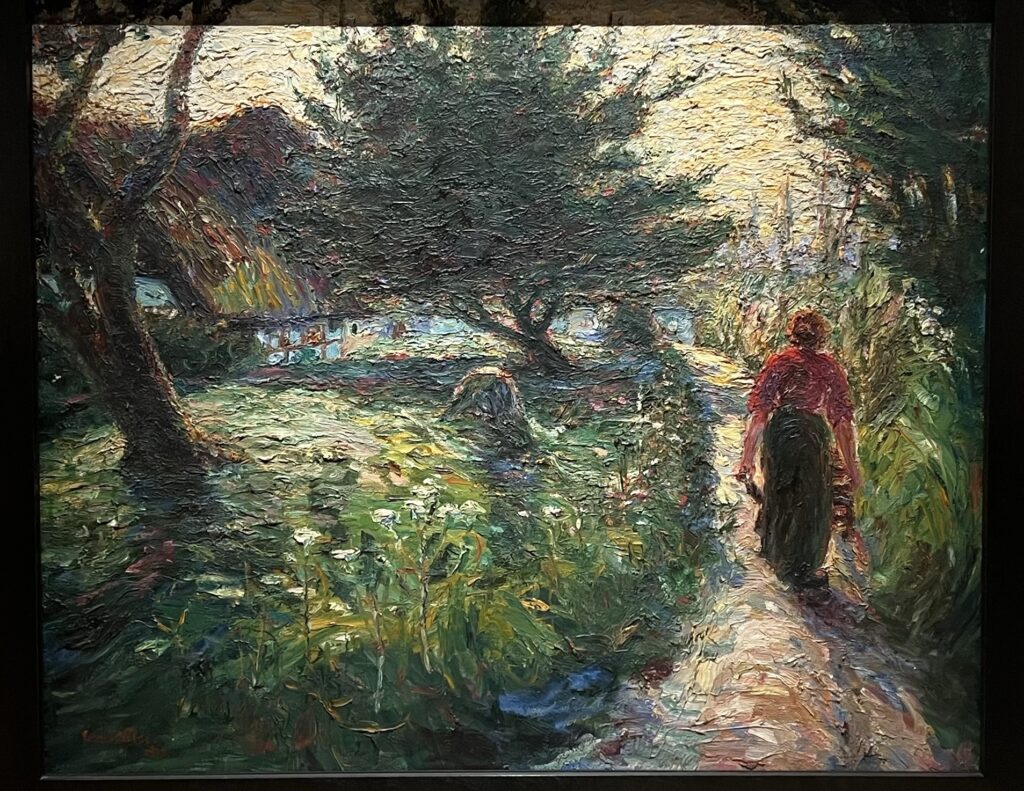
Beyond the Carmen Thyssen collection, the other floors featured some amazing work:
- Ambrosius Bosschaert (Antwerp, 1573–The Hague, 1621) — Vase of Flowers in a Window
- Nicolaes Maes (Dordrecht, 1634–Amsterdam, 1693) — The Old Lacemaker
- Kenny Scharf (Los Angeles, 1958) — various works
- George Grosz (Berlin, 1893–1959) — Metropolis (1916–1917)
- Frantisek Kupka (Opocno, 1871–Puteaux, 1957) — Localization of Graphie Mobiles
- Juan Gris (Madrid, 1887–Boulogne-sur-Seine, 1927) — The Smoker (Frank Haviland)
- Pablo Picasso (Malaga, 1881–Mougins, 1973) — Man with a Clarinet
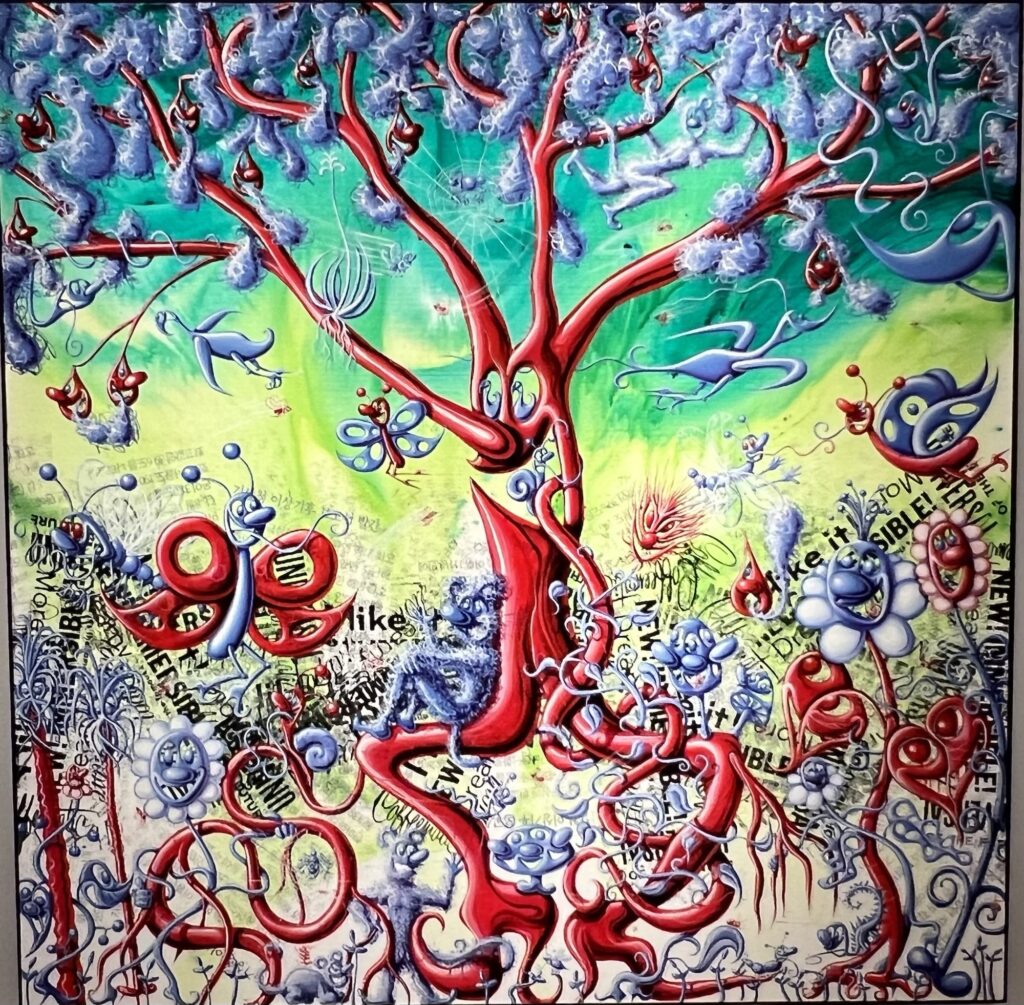
Kenny Scharf was a very nice surprise, his quirky psychedelic collection put a smile on my face.
Museo del Prado
Next stop: the Prado Museum ($27.0 USD) — Spain’s national art museum and one of the most famous in the world, housed in an 1819 neoclassical building designed by Juan de Villanueva. Its collection is built on the Spanish royal holdings, making it deep in Velazquez, Goya, and El Greco as well as Flemish and Italian masters collected by the Habsburgs and Bourbons.
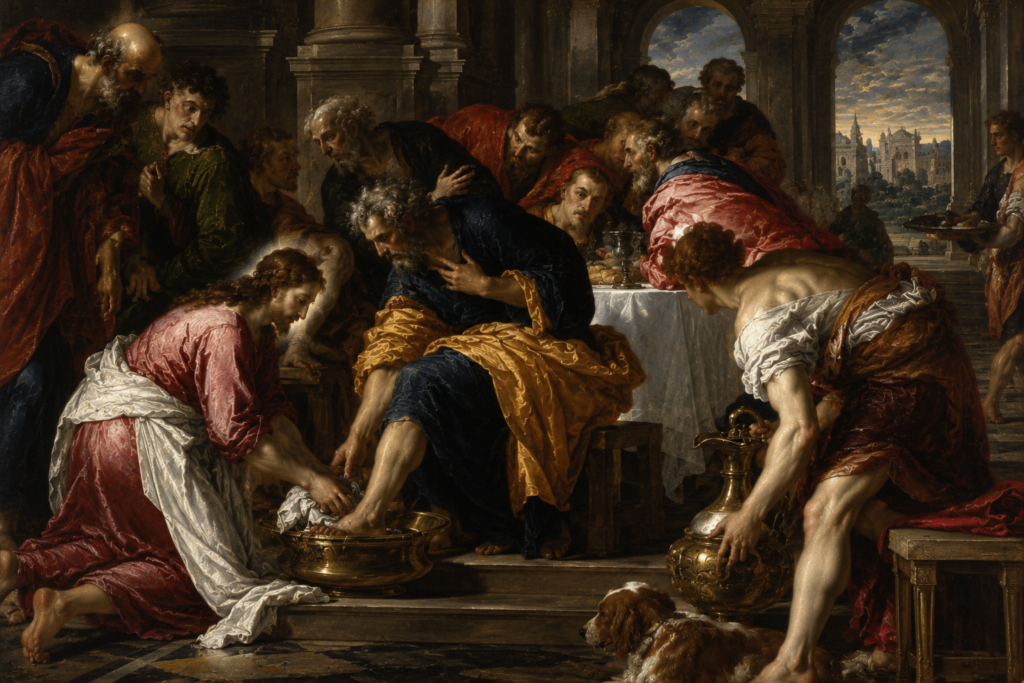
Evidently there is no photography allowed in the Prado, so there won’t be any photos — just my favourite artist names:
- Jacopo Tintoretto (1518–1594) — The Washing of the Feet
- Adriaen van Stalbent (1580–1662) — The Sciences and the Arts
- Hendrick van Balen & Jan Brueghel the Elder — Taste, Hearing, Touch
- David Teniers the Younger (1610–1690) — The Archduke Leopold William in His Picture Gallery
- Antonio Munoz Degrain (1840–1924) — The Lovers of Teruel
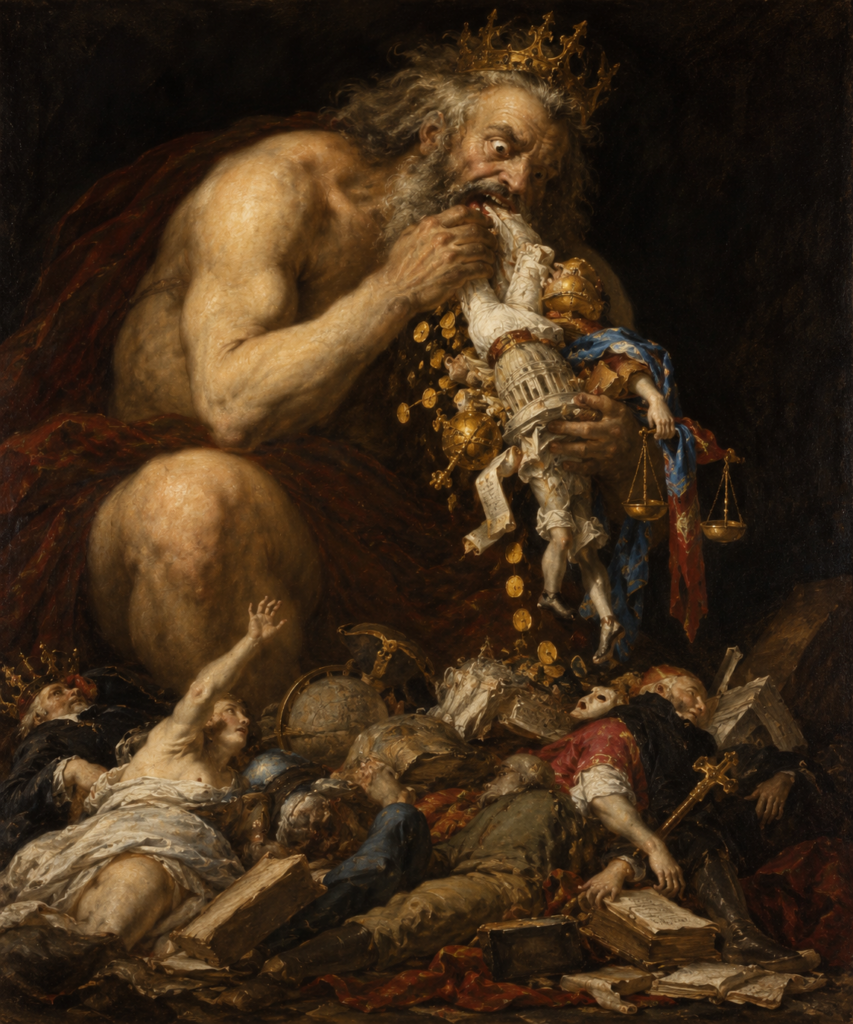
- Francisco de Goya (1746–1828) — The Inquisition, Two Old Men Eating, The Pilgrimage to San Isidro, Saturn, and The 3rd of May 1808: The Executions
- Genaro Perez Villaamil (1807–1854) — Diptych with 42 Views of Spanish Cities and Their Monuments
- Jose Moreno Carbonero (1860–1942) — Charles, Prince of Viana
- Hieronymus Bosch (c.1450–1516) — The Garden of Earthly Delights
- Diego Velazquez (1599–1660) — Las Meninas
And here are some AI generated versions of the forbidden fruit at the Prado.



An Honest Assessment
The Prado Museum seems a bit overrated. The lighting is horrible and there is glare on many of the artworks. Of course, it tends to be way overcrowded. The Prado feels more like a church featuring repetitive Christian iconography — so it all depends on what type of art you are seeking. If Spanish royal portraiture and Counter-Reformation piety are your thing, the Prado is unmatched. But if you want range, surprise, and the full arc of Western painting, you may find yourself longing for something else.
Personally, I enjoyed the Thyssen more — the diversity of artists and imagery throughout the museum, from Dutch still-lifes to German Expressionism to American Impressionism, made for a far more satisfying day. The Prado is a cathedral of art history. The Thyssen is a conversation.
After the museums I stopped at a Carrefour grocery store for some snacks (€10.0) and headed back to the room for some rest. Eight hours of looking at paintings exhausts the eyes in a way that’s hard to describe — a pleasant fatigue, like your visual cortex has run a marathon.
Dinner at Qoritika, a peruvian restaurant. I ordered the Lomo Saltado and it was delicious.

By the Numbers
| Item | EUR |
|---|---|
| Breakfast (toast, coffee, OJ) | €7.0 |
| Madrid City Card (4-day) | €29.0 |
| Thyssen-Bornemisza Museum | €14.0 |
| Prado Museum ($27.0 USD) | €24.84 |
| Carrefour (snacks) | €10.0 |
| Total | €84.84 |
Leave a Reply