
Draft — sensory notes and photos coming after our July 2026 visit to Riga.
The Overview
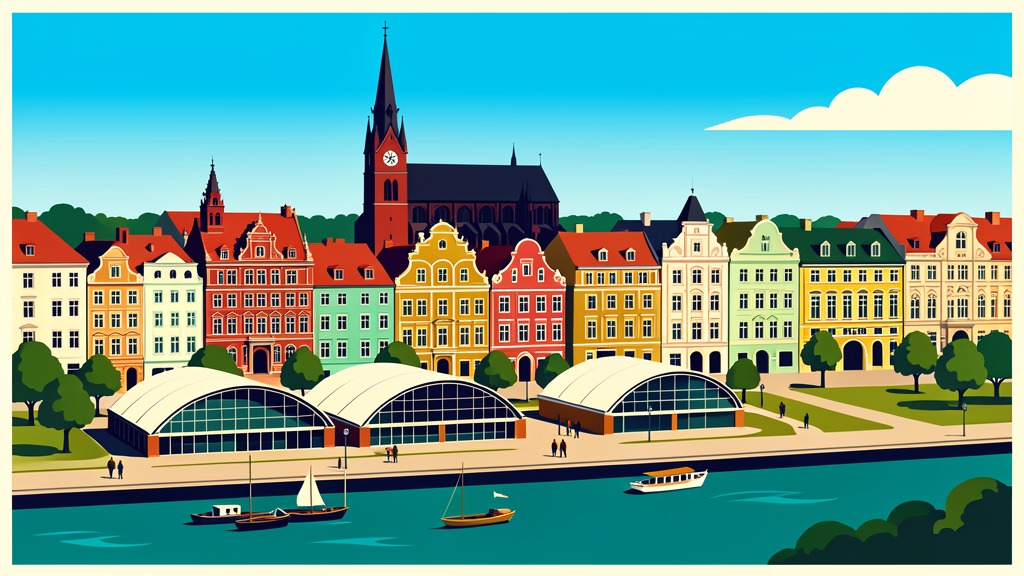
Riga is the largest of the three Baltic capitals and the most architecturally extravagant — a city where Art Nouveau facades erupt in sculptural excess, where the central market occupies four repurposed zeppelin hangars, and where a medieval Old Town rubs shoulders with one of Europe’s most intact collections of Jugendstil architecture. If Helsinki is the quiet Nordic cousin and Tallinn the fairy-tale medieval jewel, Riga is the flamboyant middle child — louder, bigger, dressed to impress.
We arrive by bus from Tallinn, a four-hour journey through Baltic birch forest and farmland, and we have three full days to explore. The Old Town (Vecrīga) is a UNESCO World Heritage site, but the real revelation lies just beyond it — the Art Nouveau district along Alberta iela and Elizabetes iela, where every building is a gallery. This is also a city with a complicated 20th century: Soviet occupation, Nazi occupation, Soviet occupation again. Independence only arrived in 1991. The scars are visible, but so is the pride.
This post is our sensory map before we arrive. We will return to fill in what we actually found.
👁 Vista — What We Hope to See
[Sensory notes to be added after the visit.]
- Alberta iela and the Art Nouveau district — the highest concentration of Art Nouveau architecture in Europe. Mikhail Eisenstein’s sculptural facades on Alberta iela look like buildings trying to become opera sets: screaming faces, peacocks, sphinxes, and serpentine vines frozen in stone. What does it feel like to walk a street where every doorway is a theatrical entrance?
- Riga Central Market [UN] — four converted zeppelin hangars from WWI, now one of Europe’s largest markets and a UNESCO site. Each hangar has a theme: meat, dairy, fish, produce. The scale is staggering. What does a zeppelin hangar full of smoked fish look like at 10am on a summer morning?
- House of the Blackheads — the most photographed building in Riga, a Dutch Renaissance guildhall rebuilt from rubble after WWII bombing. Its astronomical clock and statue of Roland make it the symbolic heart of the Old Town. Is it more beautiful in morning light or lit up at dusk?
- St. Peter’s Church — Gothic brick spire with an elevator to the observation platform. The best view in Riga, with the Daugava River, the central market hangars, and the Old Town’s red rooftops laid out below. What does the city look like from above — medieval and modern in one frame?
- Latvian National Museum of Art — reopened in 2016 after renovation, Latvia’s richest collection of national art from the 18th century to today. What does Latvian identity look like when painted by Latvians?
Because Riga was built to be looked at — but it rewards looking closer.
👅 Palate — What We Hope to Taste
[Sensory notes to be added after the visit.]
- Max Cekot Kitchen — Riga’s Michelin star. Chef Maksims Cekots runs a tiny tasting-menu-only restaurant with a fiercely seasonal, local approach. Baltic sea buckthorn, foraged mushrooms, smoked eel. What does Latvia taste like when one of its best chefs is translating the landscape onto the plate?
- 3 Pavāru Restorāns (Three Chefs) — Bib Gourmand. A trio of chefs cook creative Latvian with a modern edge in a bright, informal space. The name is literal: three chefs, one kitchen, no ego. What happens when competition is replaced by collaboration?
- Riga Central Market food stalls — smoked fish, pickled vegetables, dark rye bread, hemp butter, and grey peas with bacon (a Latvian national dish). The market is also a place to eat, not just shop. What does a bowl of grey peas taste like when eaten standing at a counter inside a zeppelin hangar?
- LIDO recreation center — a Latvian institution. A massive timber-framed complex with a self-service buffet of traditional dishes: pork shank, sauerkraut, potato pancakes, berry tarts. It’s Disneyland for Latvian food. Is it kitsch, or is it genuinely good?
- Stock Pot (Asian) — a Vietnamese pho and bao bun spot in the Centrs district. We always seek out the Asian finds, even in the Baltics. How does Vietnamese comfort food land in a city better known for herring and pork?
Because Latvian cuisine is having its moment — and we want to taste it before the world catches on.
👂 Cadence — What We Hope to Hear
[Sensory notes to be added after the visit.]
- Riga Cathedral organ — one of the largest pipe organs in Europe, with 6,768 pipes built by the German firm Walcker in 1883. The cathedral holds regular organ concerts. What does a 140-year-old organ sound like inside an 800-year-old church?
- Street musicians in Dome Square — the Old Town’s central square fills with buskers in summer. Saxophone, accordion, acoustic guitar echoing off medieval stone.
- The Central Market at full volume — vendors calling out in Latvian and Russian, the thwack of cleavers in the meat hangar, the low hum of refrigeration units under a zeppelin roof. The sound of commerce in a building meant for war.
- Līgo Festival — if our visit coincides with the summer solstice celebrations (June 23-24), we may catch the tail end of Latvia’s biggest holiday. But even in July, the folk songs linger. What does a Latvian folk choir sound like — those close harmonies, those ancient melodies?
Because Riga’s soundscape is a layer cake: medieval, art nouveau, Soviet, and something entirely new.
👃 Aroma — What We Hope to Smell
[Sensory notes to be added after the visit.]
- Smoked fish in the Central Market — the fish hangar hits you before you enter it. Alder-smoked eel, sprats, salmon. The Baltic Sea concentrated into a single room.
- Rye bread — dark, dense, slightly sour. Bakeries in the Old Town still bake it fresh in the morning. The smell of Latvian breakfast.
- Linden trees in bloom — July is linden season in the Baltic States. The parks around the Old Town (Bastejkalns, Vērmanes Garden) are lined with them. A sweet, honeyed fragrance that follows you through the city.
- Art Nouveau hallways — those grand apartment buildings on Alberta iela have century-old stairwells. Wood polish, old stone, a faint trace of coal smoke from another era. What does 1905 smell like?
Because Riga’s nose is part sea, part forest, and part history.
✋ Unwind — What We Hope to Feel
[Sensory notes to be added after the visit.]
- The cobblestones of the Old Town — Riga’s medieval streets are beautiful and punishing. Every step is a negotiation with the 13th century. How do your feet feel after three days of cobblestone walking?
- Jurmala Beach — a 30-minute train ride to the Baltic coast. Fine white sand, pine forests backing the dunes, and water temperature that might hit 20°C in July. A half-day escape from the city. What does the Baltic feel like when you’re swimming in it instead of looking at it?
- Art Nouveau door handles — the Jugendstil architects didn’t stop at facades. Door handles, stair railings, elevator grilles — every surface was an opportunity. What does it feel like to open a door designed by someone who thought door handles mattered?
- The AC Hotel Riga sauna — Marriott Bonvoy, in the Art Nouveau district. After Tallinn’s hotel sauna and Helsinki’s Löyly, we’re keeping the Baltic sauna streak alive. Three countries, three saunas, three ways to sweat.
Because the Baltic doesn’t just look beautiful — it feels beautiful, if you let it.
🙏 Sanctuary — What We Hope to Feel in the Spirit
[Sensory notes to be added after the visit.]
- Riga Cathedral — the mother church of Latvia, begun in 1211. Romanesque, Gothic, Baroque renovations layered over eight centuries. The wooden pulpit, the stained glass, the organ. Does a church that has survived crusaders, Reformation, Soviet atheism, and independence radiate resilience, or just exhaustion?
- Museum of the Occupation of Latvia — the hardest stop on our Baltic itinerary, and the most necessary. Latvia was occupied by the Soviets (1940-41), then the Nazis (1941-44), then the Soviets again (1944-1991). The museum tells this story without flinching. How do you hold three occupations in your mind and still walk outside into a sunny summer day?
- Freedom Monument — a woman holding three golden stars above her head, unveiled in 1935, somehow never torn down through fifty years of Soviet occupation. Flowers are still laid at its base. Latvians still pause as they pass. What does it feel like to stand before a monument that outlasted the empire that wanted it gone?
Because Latvia’s soul was forged under occupation — and its sacred spaces know it.
🧭 Wander — What Drew Us Here
[Sensory notes to be added after the visit.]
- Why the Baltics, part three: Latvia. We chose Riga because the Baltics are a trilogy, not a solo act. Helsinki was the Nordic gateway, Tallinn the medieval dream, and Riga — Riga is the city that refuses to be just one thing. Medieval, Art Nouveau, Soviet, European — it wears all four identities at once.
- The Alberta iela walk we didn’t plan — there are 800 Art Nouveau buildings in Riga. The guidebooks show you the best street. But what about the ones you find by wandering? The faded facade with one perfect peacock above the door? The stairwell you peer into because someone left the outer door ajar?
- The train to Jurmala — 30 minutes and a century away. Wooden summer houses from the 19th century, when Riga’s wealthy fled the city for the sea breeze. What does a Baltic beach town feel like in the age of smartphones?
- What we didn’t plan for — the best moment in any trip is the one you couldn’t have scheduled. What will it be in Riga?
Because travel reduced to sightseeing is travel half-lived.
Practical Notes
- Getting there: Bus from Tallinn — Lux Express or Ecolines, ~4 hours, comfortable seats with WiFi and personal screens. Tickets €15-25 booked online. Terminal: Riga International Coach Terminal (Autoosta), 5-minute walk to the edge of Old Town.
- Hotel: AC Hotel Riga (Marriott Bonvoy). Located in the Art Nouveau district, a 10-minute walk to Old Town through the most beautiful streets in the city. Platinum elite benefits apply.
- Getting around: Riga’s Old Town is entirely walkable. For longer trips (Jurmala, Art Nouveau district loops), use Bolt (Estonian-founded, works across all three Baltic states). Trams and buses run regularly — a single ride is €2 if bought from the driver, cheaper with an e-talons card.
- Art Nouveau walking route: Start at the Riga Art Nouveau Museum (Alberta iela 12 — the restored apartment of architect Konstantīns Pēkšēns), then walk Alberta iela, Strēlnieku iela, and Elizabetes iela. Allow 2-3 hours with stops.
- Central Market strategy: Go in the morning (8-10am) when it’s local shoppers, not tourists. The fish hangar is the most atmospheric. Bring cash for small purchases. The grey peas are in the dairy hangar, counter 7.
- Dining reservations: Max Cekot Kitchen books 6-8 weeks out. 3 Pavāru books 2-3 weeks out. Both are small — don’t leave it to chance.
- Museum of the Occupation: Free entry (donation suggested). Allow 2 hours. The exhibits are emotionally heavy — don’t plan a Michelin meal immediately after. Give yourself time to process.
- Jurmala day trip: Train from Riga Central Station to Majori station, 30 minutes, €2.50 each way. Majori Beach, Jomas iela (pedestrian street with cafés), and the wooden summer houses are a 5-10 minute walk from the station.
- Weather in July: Average highs 22°C (72°F), lows 13°C (55°F). Similar to Helsinki and Tallinn — Baltic climate is consistent. Pack layers.
- Language: Latvian is the official language. Russian is widely spoken (about 35% of Riga’s population). English is common in the city center and with younger people. “Paldies” (thank you) goes a long way.
- Currency: Euro (€). Cards accepted everywhere, including the Central Market.
Leave a Reply