
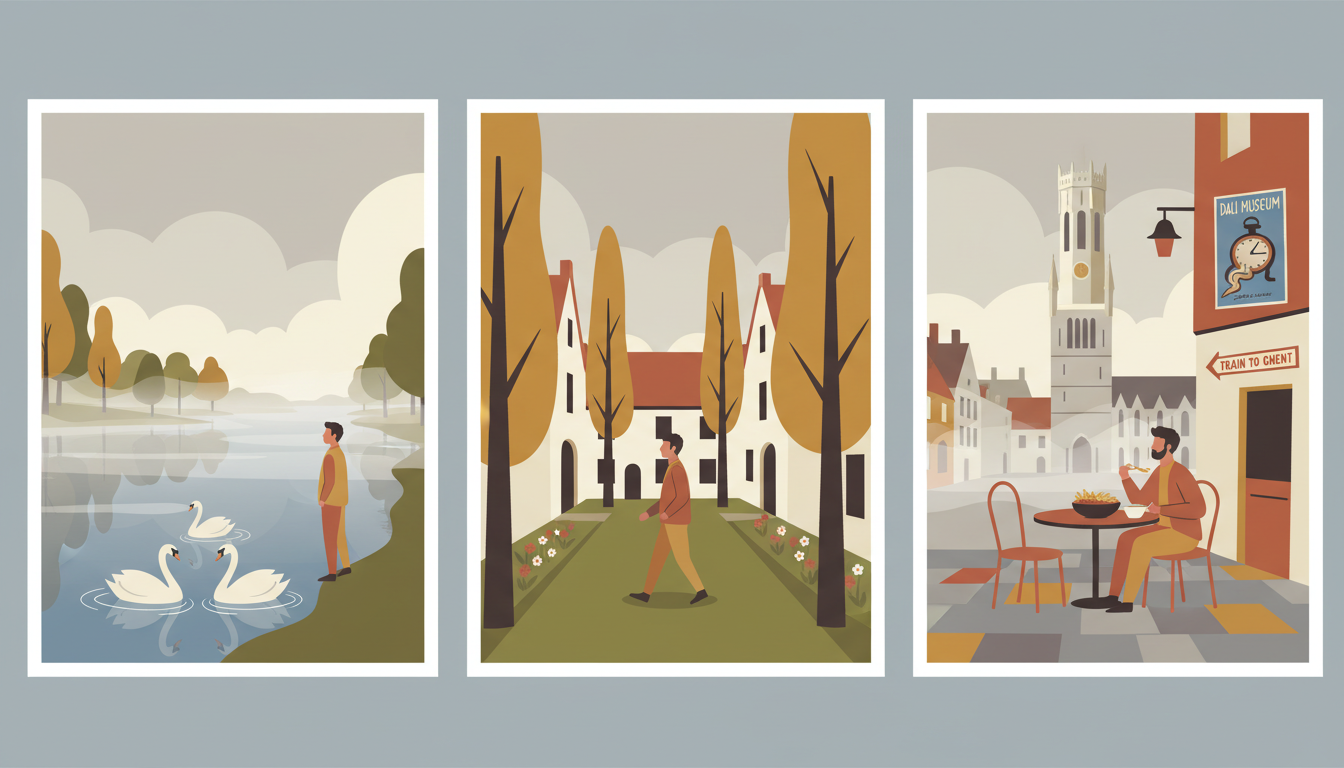
Belgium. Day 1 — Bruges. Got up early to take the 7:30 AM train to Amsterdam Central, then boarded a tour bus ($40.0 USD) to Bruges. The drive was filled with fog the entire way — thick, atmospheric, the kind that turns the Dutch and Belgian countryside into a watercolour painting. By the time we arrived, Bruges was still half-hidden in mist, which felt appropriate. A medieval city should reveal itself slowly.
The Walking Tour
Bargeplein — Katelijnparking
Our bus dropped us at Bargeplein. The start of a walking tour through one of Europe’s best-preserved medieval cities.
Minnewater — The Lake of Love
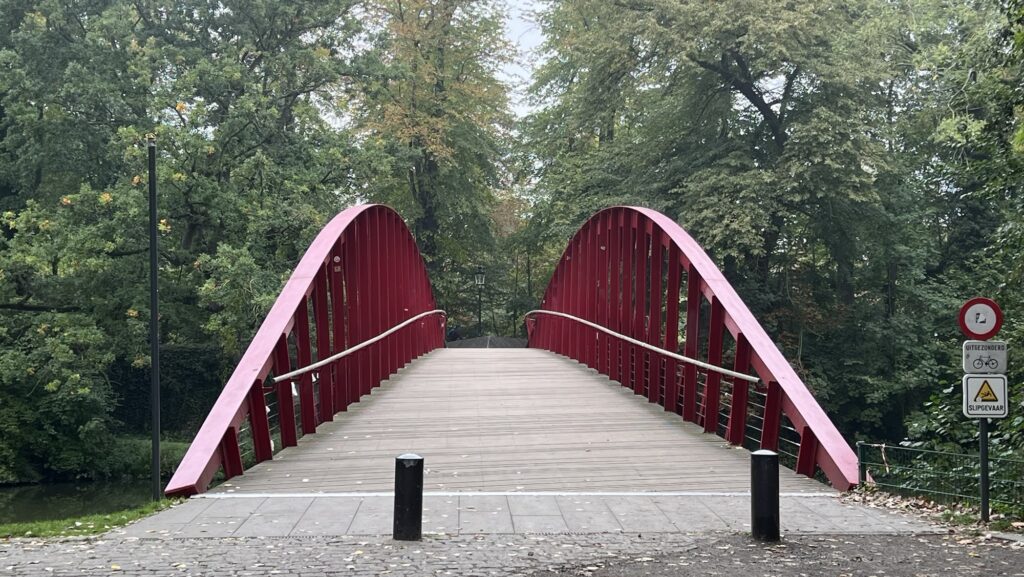
First stop: Minnewater, also known as the Lake of Love. The beautiful lake, the swans, the fog lifting just enough to reveal the water — it earned its name. According to legend, the lake is named after Minna, a young woman who fled an arranged marriage and died of exhaustion in the arms of her true love.
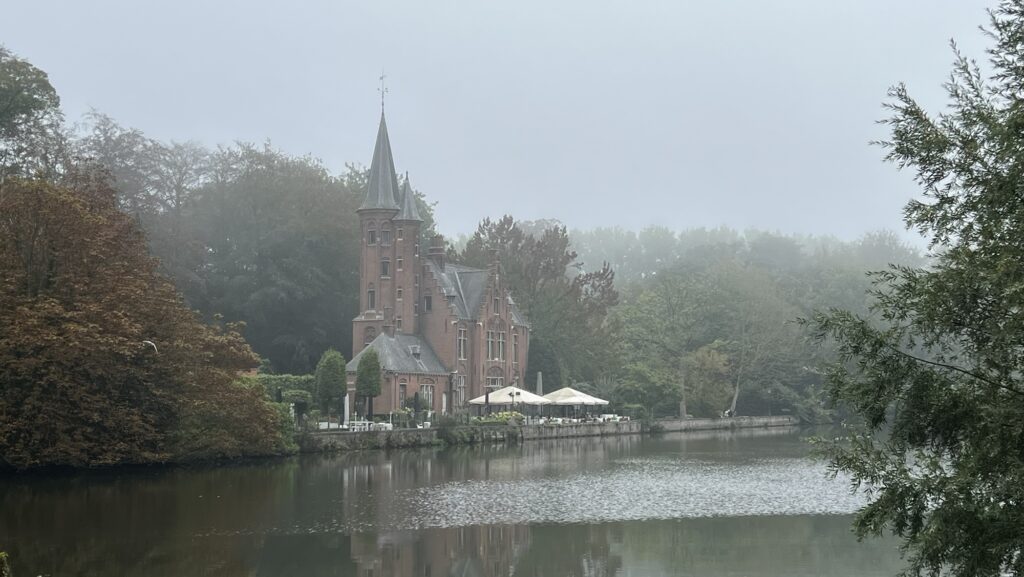
Begijnhof — Founded 1245
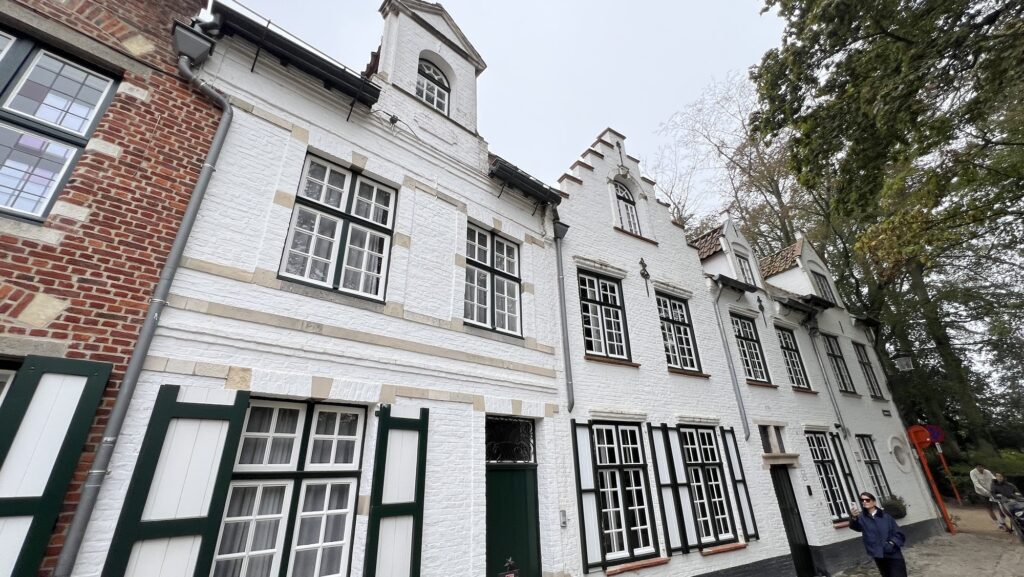
The Beguinage, founded in 1245 and now a UNESCO World Heritage site. This walled sanctuary was home to the Beguines — emancipated lay-women who led pious, celibate lives without taking formal religious vows. They weren’t nuns; they could leave, marry, own property. But they chose a life of service and silence. The whitewashed houses, the tranquil courtyard garden, the tall trees — the Beguinage is still inhabited today by single women, and a sign at the entrance asks visitors to observe silence. Centuries of quiet, still unbroken.
Walplein — Bruges Beer
In this beautiful square, our guide explained the history of Bruges beer. At its medieval peak in 1441, Bruges had 54 breweries. Beer wasn’t a luxury — it was safer than water, consumed by everyone from labourers to lords. Today, De Halve Maan brewery continues the tradition, complete with an underground pipeline built in 2016 that pumps beer from the brewery to the bottling plant — 1,500 gallons an hour, flowing beneath the cobblestones.
Saint John’s Hospital — Medieval Medicine
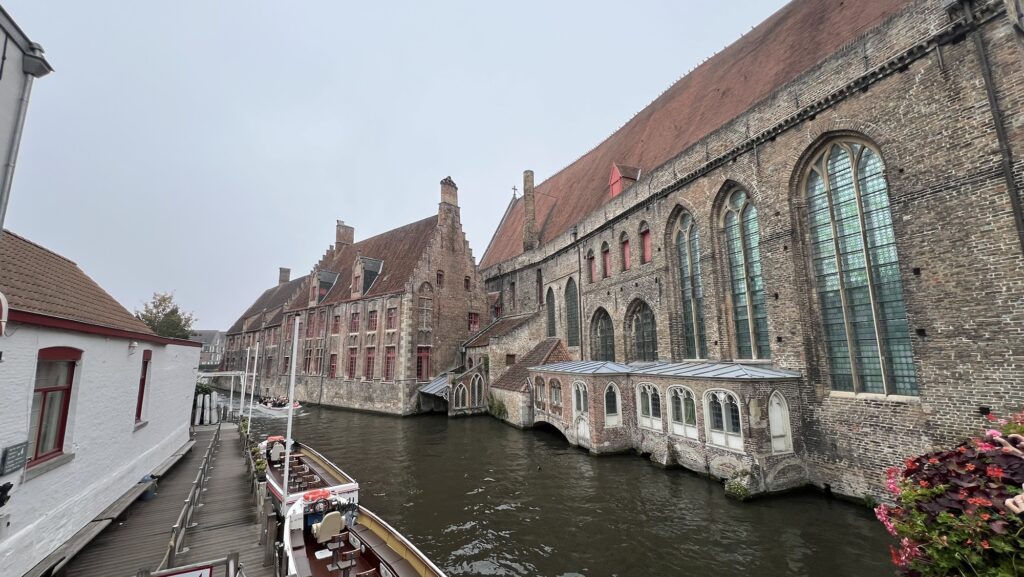
In front of Old St. John’s Hospital, our guide explained how the medieval health system worked. Founded in the 12th century, it’s one of Europe’s oldest surviving hospital buildings. The sick were cared for by nuns and lay brothers. Medieval hospitals weren’t about curing disease — they were about providing comfort, food, shelter, and spiritual care. You came here to die well, not necessarily to recover.
Church of Our Lady — Onze-Lieve-Vrouwekerk
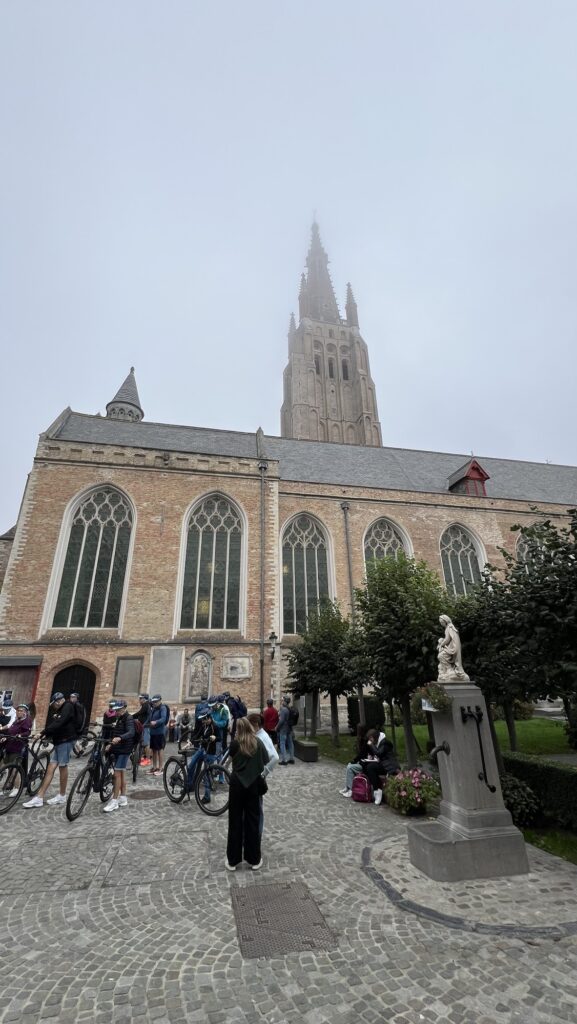
The Church of Our Lady — its 115-metre brick tower is the second-tallest in the world, visible from nearly everywhere in Bruges. Inside: Michelangelo’s Madonna and Child, the only sculpture by the master to leave Italy during his lifetime.
St Salvator’s Cathedral

St Salvator’s Cathedral (Sint-Salvatorskathedraal) is the oldest parish church in Bruges, although—somewhat surprisingly—it has only been the city’s cathedral since the 19th century.
Its origins are extremely old. Tradition says a chapel was established here around 646, while the first surviving written reference dates to 988. By 1086, St Salvator was documented as a parish church. Fires destroyed successive buildings in 1116 and 1166; part of the lower section of today’s tower survives from this Romanesque period.
Boniface Bridge — A Legend
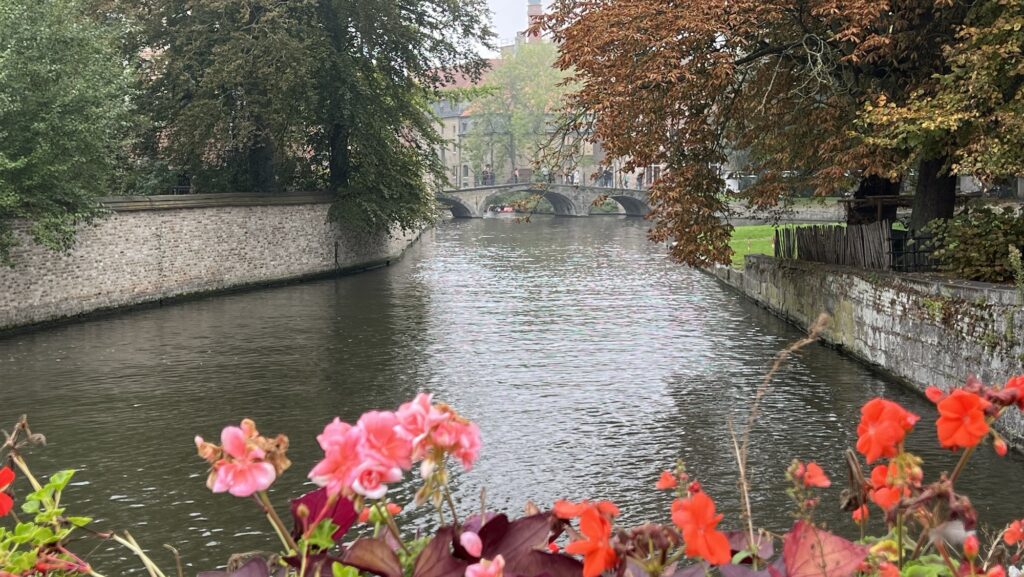
One of the most charming spots in Bruges. The legend: if you kiss your beloved on this bridge, your love will be eternal. Or, depending on which version you hear, the bridge is named after a saint who was murdered nearby. Either way, the view from here — canal, medieval houses, willows — is postcard-perfect.
Huidenvettersplein — Tanners Square
How tanners worked in medieval Bruges. A brutal trade — hides soaked in urine and lime, scraped, stretched, and dyed. The square’s name remembers an industry that built fortunes and destroyed lungs.
Burg Square — Gothic Power
Burg Square: the Gothic Town Hall (1376–1420), the Old Court House, and the Basilica of the Holy Blood, which houses a relic said to contain drops of Christ’s blood brought from Jerusalem after the Second Crusade.
The Markt — Grote Markt
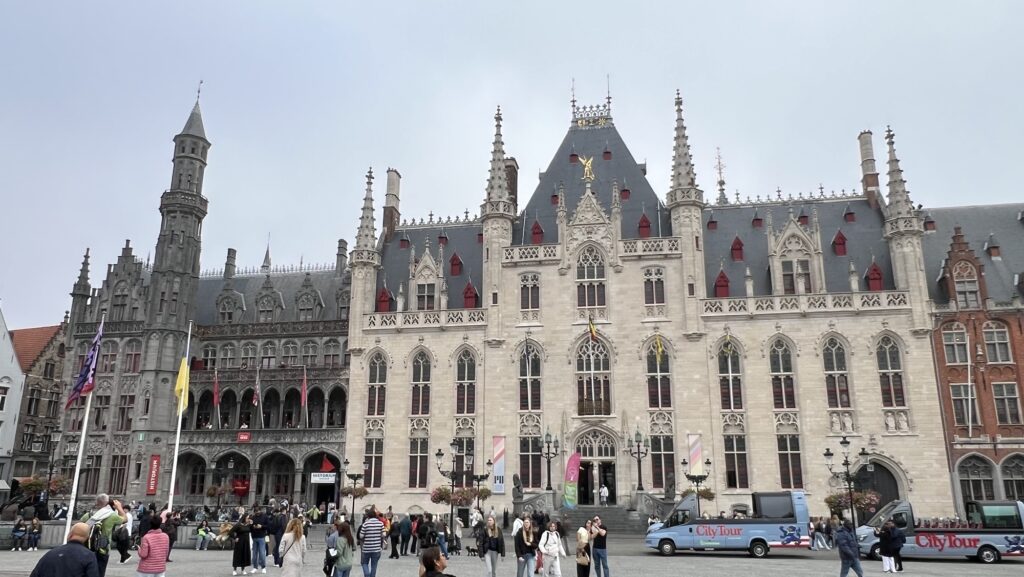
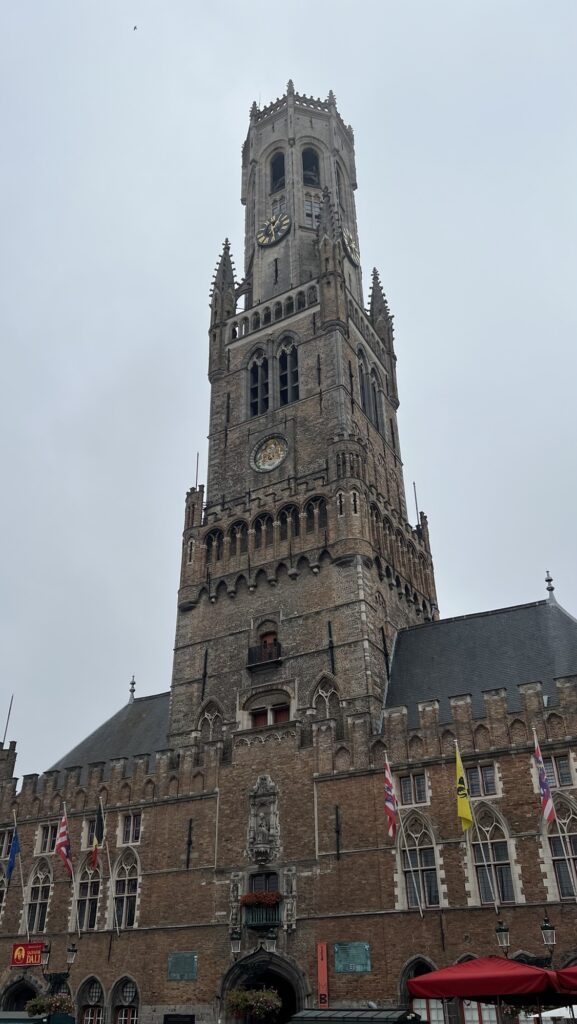
The final stop: Grote Markt, the market square. The Belfry tower dominates — 83 metres, 366 steps, a carillon of 47 bells. This was the commercial heart of medieval Bruges, where merchants from across Europe traded cloth, spices, and art.
Palate — An Overpriced Meal at the Markt
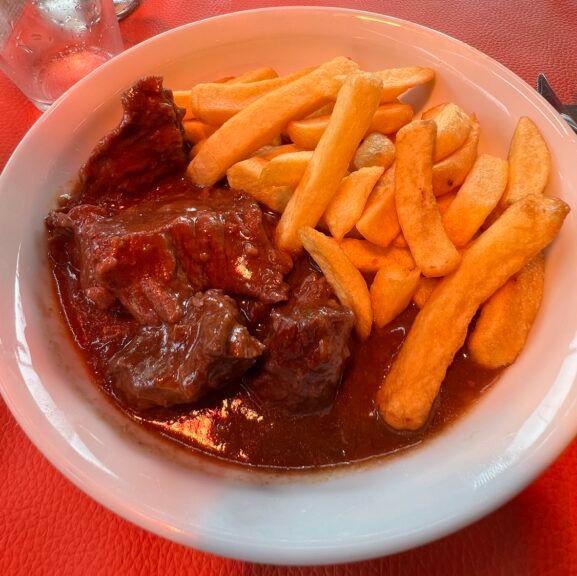
I had a meal here: soup, beef stew with fries, and chocolate mousse — €32.0. The food was good, but €32 for this felt steep. Location tax at the Markt is real. The stew was rich and the chocolate mousse was excellent, but you’re paying for the view of the Belfry as much as the ingredients. A lesson for next time: eat one street back from the square.
Salvador Dali Museum
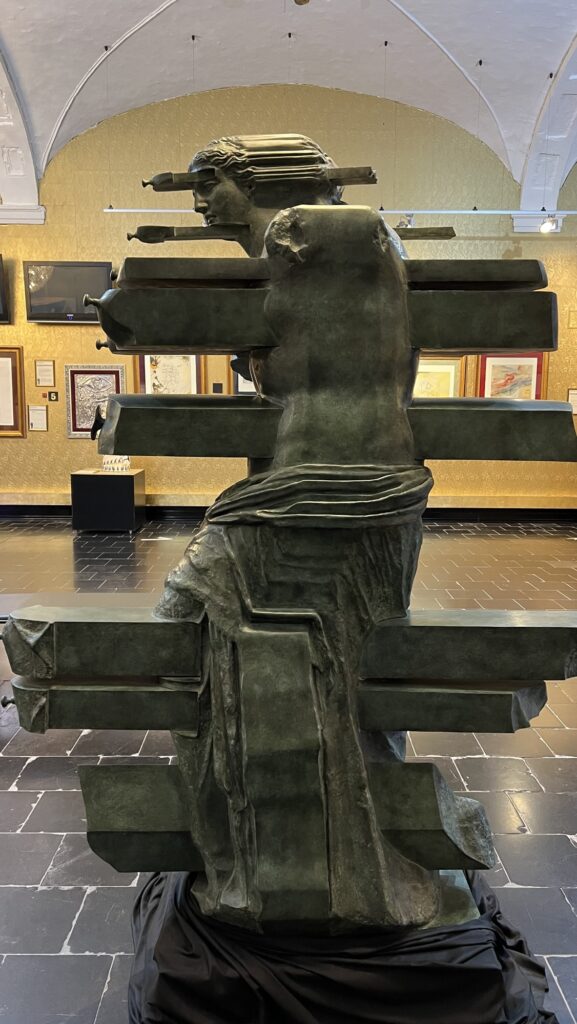
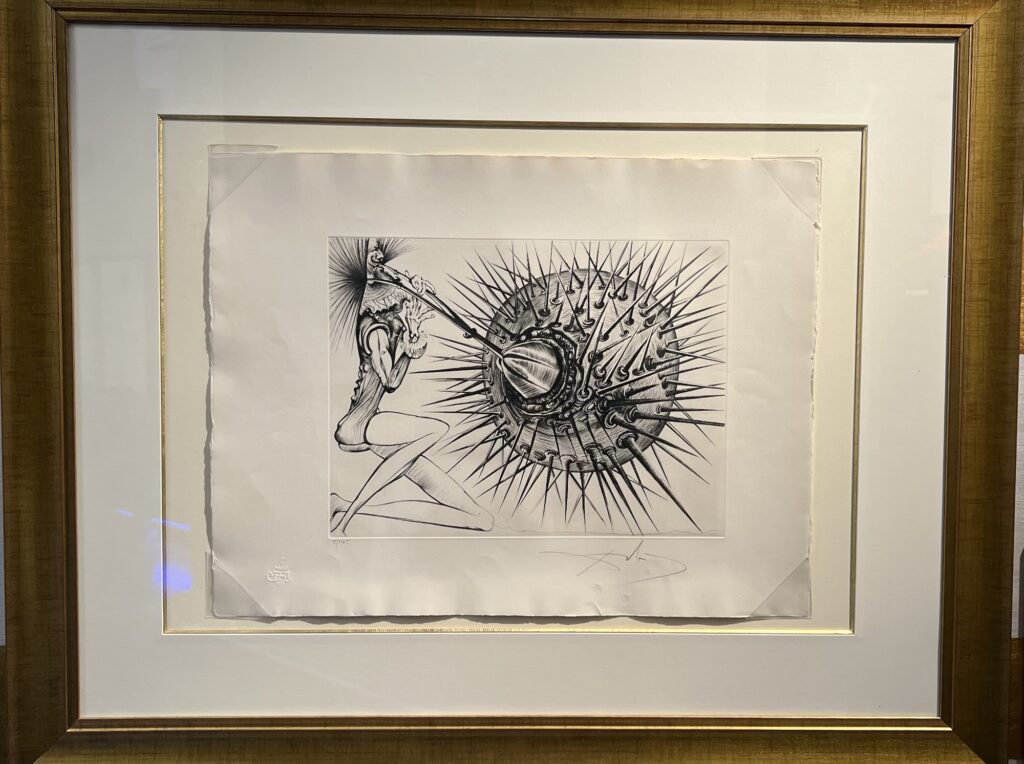
Before leaving Bruges, I visited the Salvador Dali Museum — €10.0. A collection of the master’s graphic works and sculptures in a Gothic cellar in the heart of Bruges. Dali in a medieval Belgian cellar feels exactly right — the surrealist who would have appreciated the juxtaposition.


Took a train from Bruges to Ghent — €8.4 — and checked into my hotel. Tomorrow: Ghent.
By the Numbers
| Item | EUR |
|---|---|
| Tour bus (Amsterdam→Bruges, $40.0 USD) | €36.8 |
| Salvador Dali Museum (Bruges) | €10.0 |
| Lunch (soup, stew, mousse at Markt) | €32.0 |
| Train (Bruges → Ghent) | €8.4 |
| Total | €87.2 |
Leave a Reply