
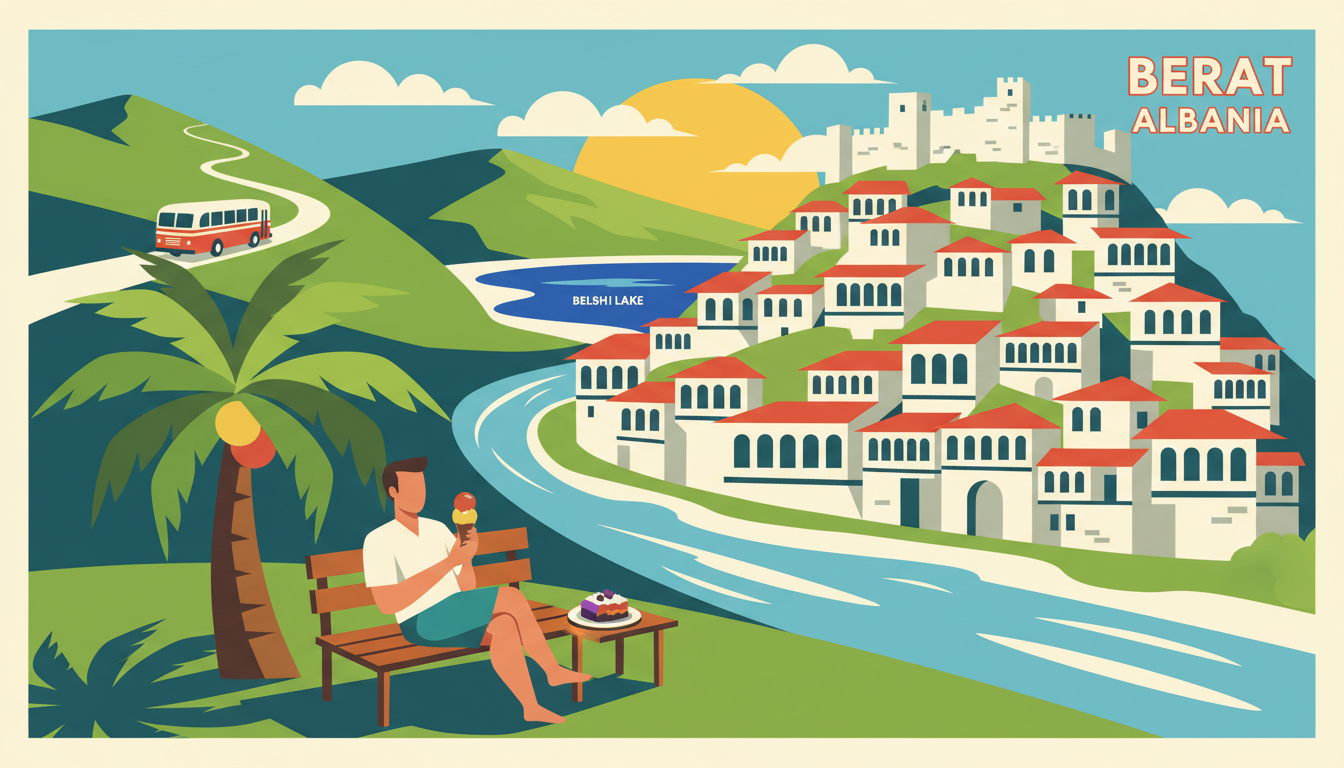
We left Tirana at 9:15 am and arrived in Berat at 11:45 — two and a half hours on the best road I’ve traveled in Albania. Smooth pavement, rolling mountain views the entire way, and I put on my earbuds and listened to music for most of it. The tour guide’s debrief I’ve heard many times over by now. Sometimes the best part of a day trip is the drive itself — and this one set the bar high before we even arrived.
👁 Vista — Belshi Lake
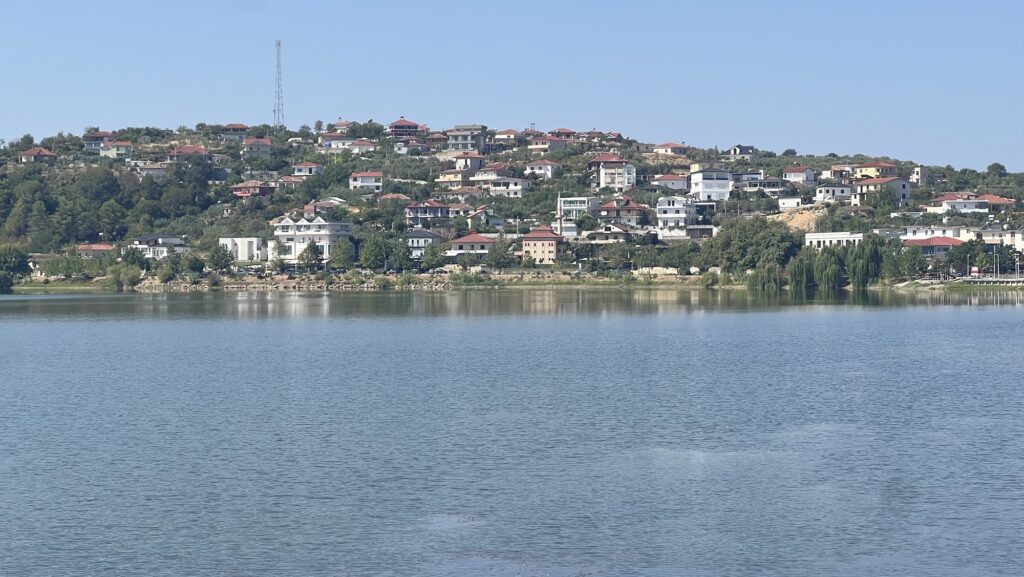
Before we reached Berat, we stopped at Belshi Lake. It’s a small lake that looks unimpressive after Lake Ohrid — but it has its own charm. The small community here is peaceful and chill. No tour buses, no souvenir stalls, no rush. A retiring individual might find the relaxed atmosphere and the lake view exactly what they’re looking for. Not every body of water needs to be spectacular. Some just need to be quiet.
👁 Vista — Berat Castle (Kalaja)
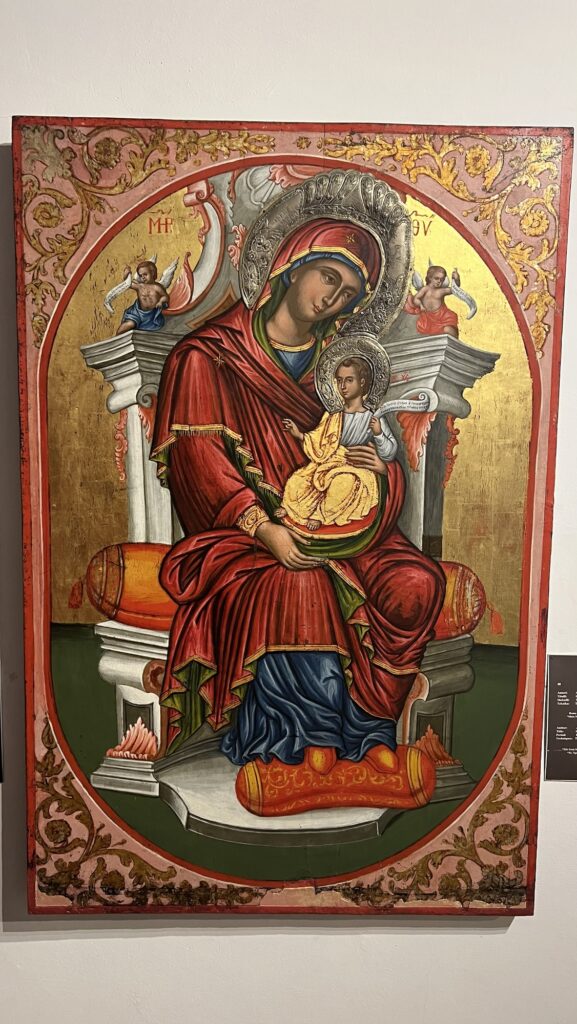
The first stop in Berat proper was the Castle — Kalaja, perched on a rocky hill on the right bank of the Osum River. Originally an Illyrian settlement with ceramic finds dating to the 7th century BCE, the site was later known as Antipatrea — possibly founded by Cassander of Macedon around 314 BCE. The Romans burned it to the ground in 200 BCE (Livy records the legate Lucius Apustius “killing the men of military age, granting all the plunder to the soldiers, demolishing the walls and burning the city”). It was rebuilt under the Byzantines — Theodosius II in the 5th century, Justinian I in the 6th, and again by the Despot of Epirus in the 13th century.
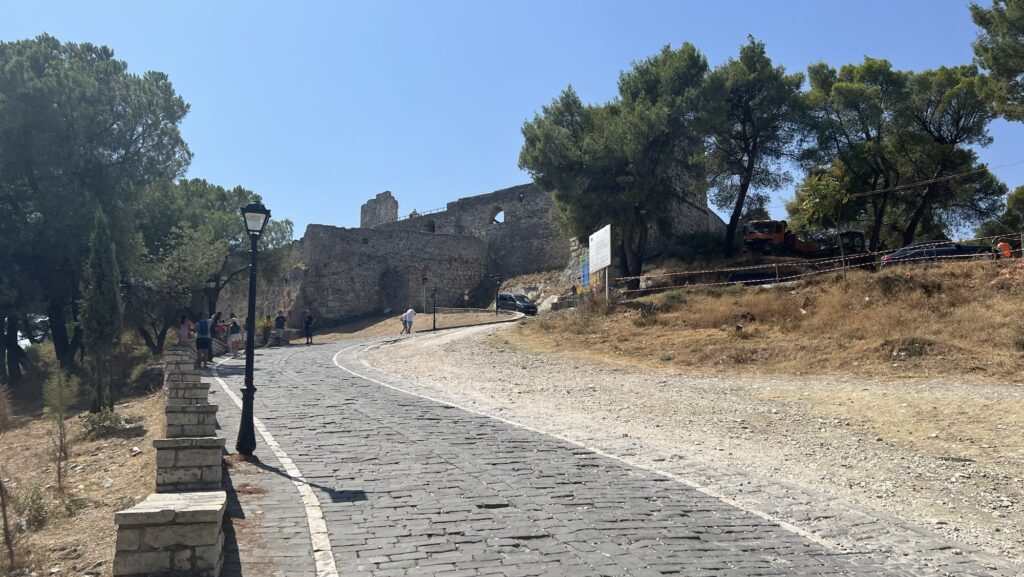
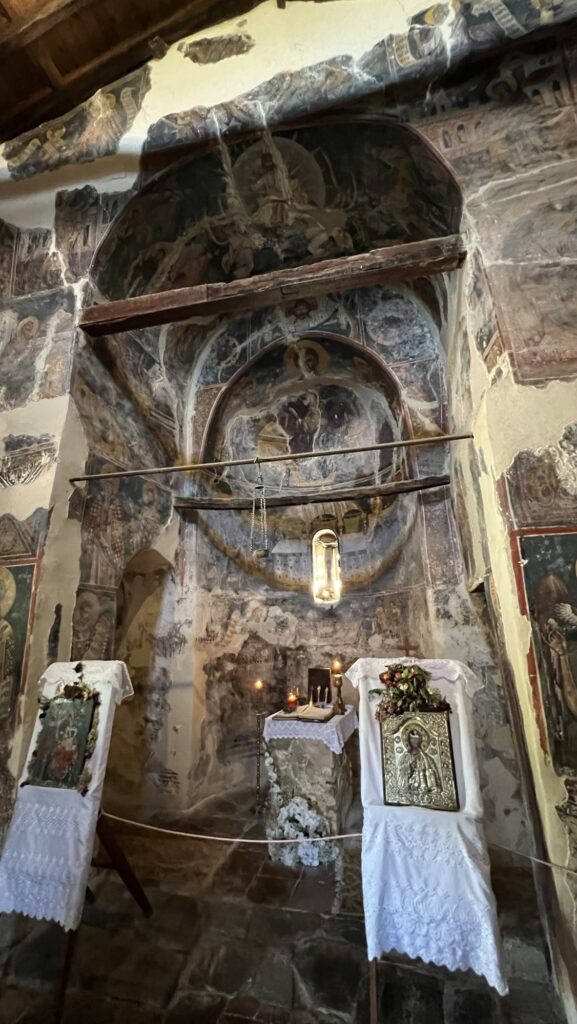
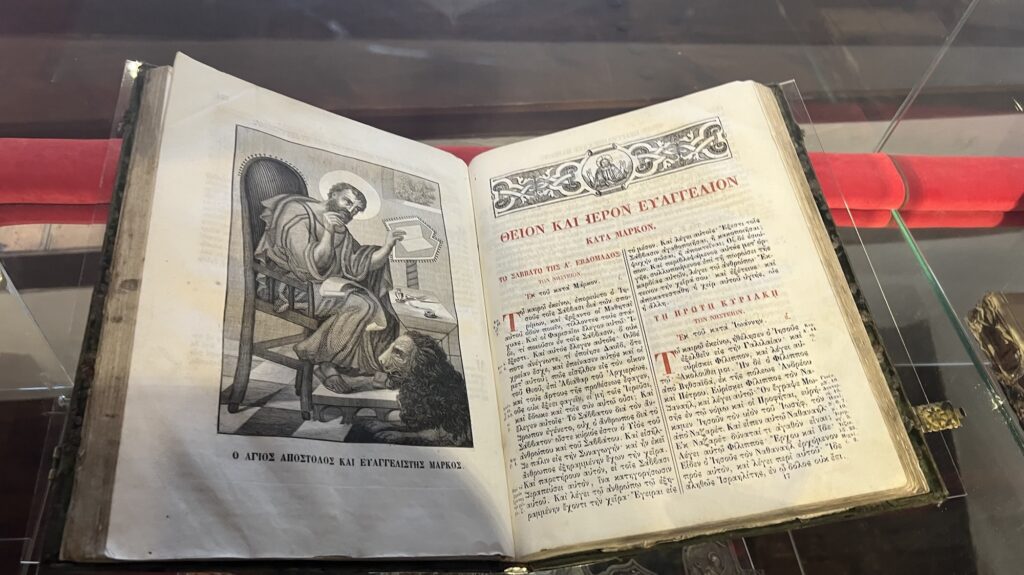
The castle still contains about 20 churches within its walls — most from the 13th century — and the remains of one mosque for the Ottoman garrison. Walking through it, you’re walking through Illyrian, Macedonian, Roman, Byzantine, Bulgarian, Serbian, Ottoman, and Albanian history, stacked like geological strata. The walls have been rebuilt so many times they’re less a single structure and more a conversation between empires.
👅 Palate — Moyo: Musaka and Sunday Lunch
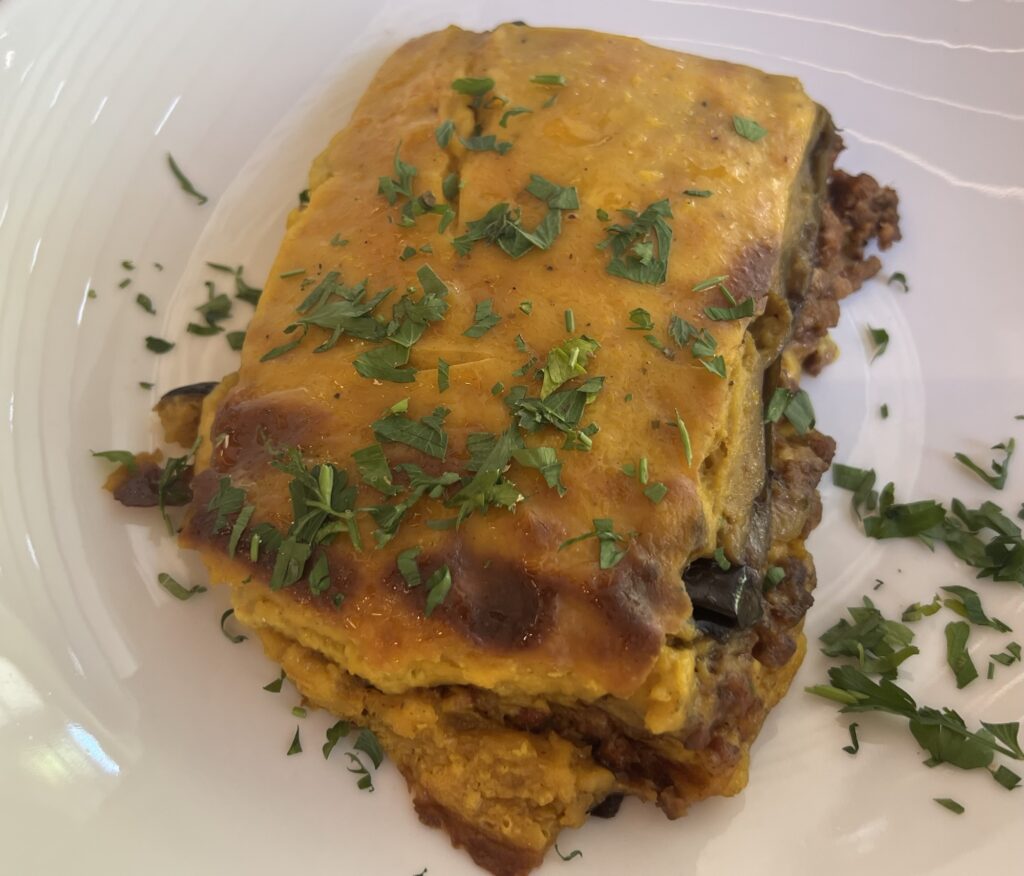
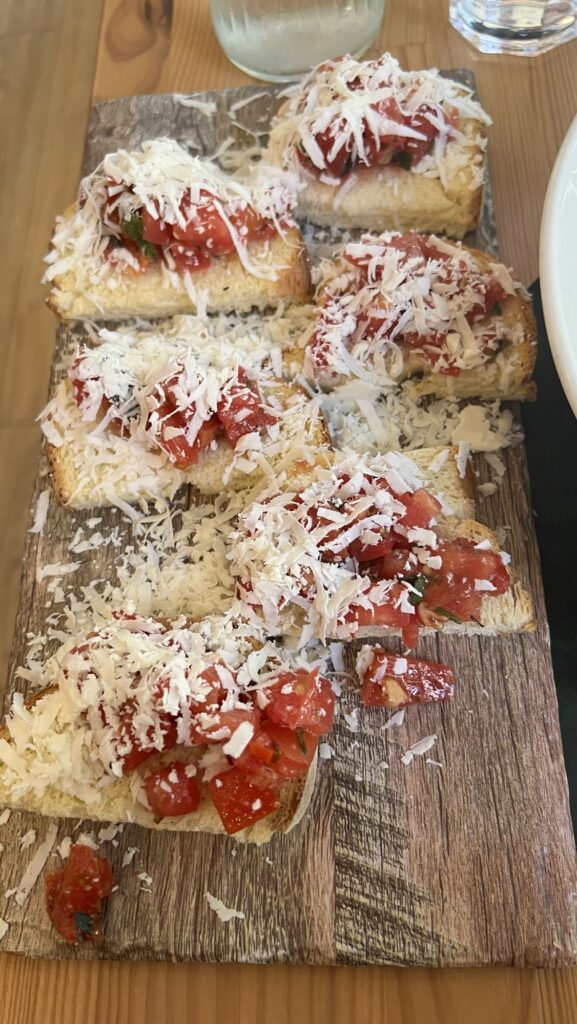
Lunch was at Moyo. I ordered a tomato bruschetta and Musaka — a layered dish with potatoes, eggplant, ground beef, served in a lasagna-style configuration. Nothing like the Greek moussaka I’ve had before. This was Albanian musaka — denser, earthier, the eggplant carrying the dish rather than hiding in it. I have not had anything quite like it. 1,200 Lek (€12.63) for bruschetta, musaka, and water.
It was amazing and I have not had any dish like it before.
👁 Vista — The City of a Thousand Windows
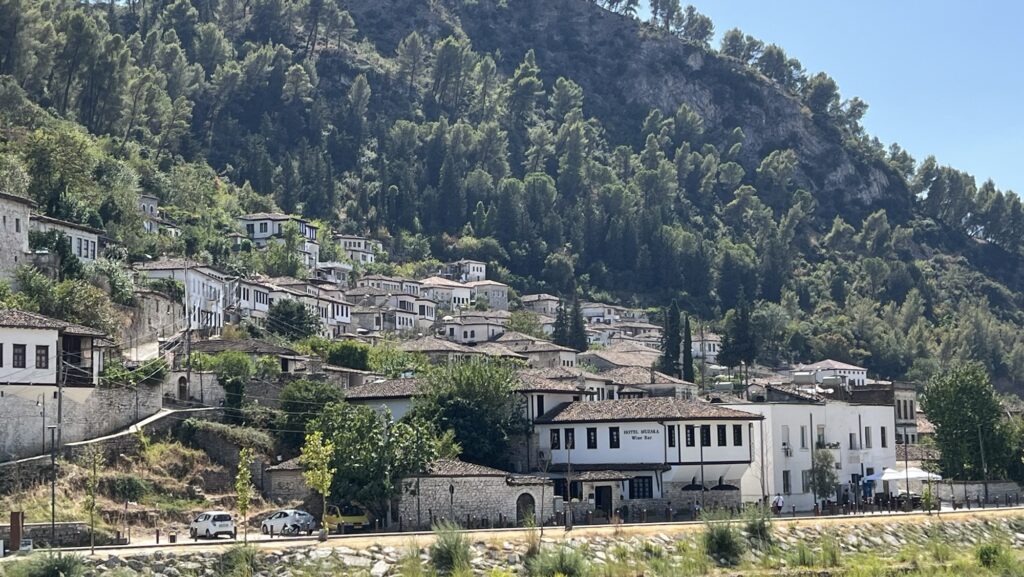
After lunch I went for a walk through old town Berat. The city, designated a UNESCO World Heritage Site in 2008, is famous for blending Ottoman architecture with Byzantine styles. Its nickname, the “City of a Thousand Windows,” comes from the iconic white Ottoman houses that climb the hillsides, each adorned with large, gleaming windows overlooking the Osum River.
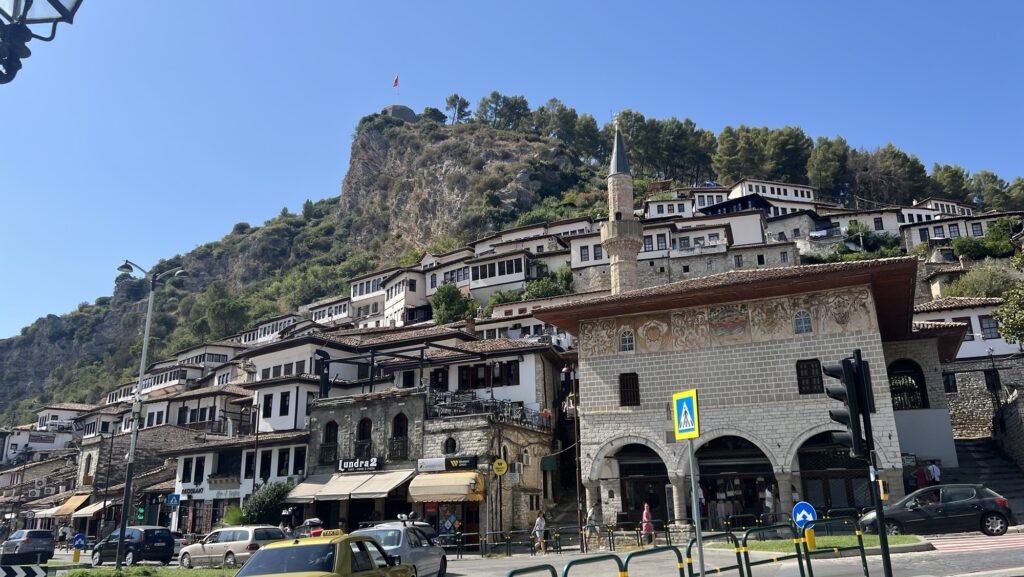
Berat is divided into three historic quarters: Kalaja (the castle hill), Mangalem (at the foot of the castle), and Gorica (on the left bank of the Osum). The pine forests above the city climb the slopes of Mount Tomorr — which, according to Albanian legend, was once a giant who fought another giant called Shpirag over a woman. They killed each other, and the woman’s tears became the Osum River. The city gets 2 million visitors per year, all year round — though on this Sunday, the streets felt calm, nearing the end of summer.
🙏 Sanctuary — The Palm Tree Bench
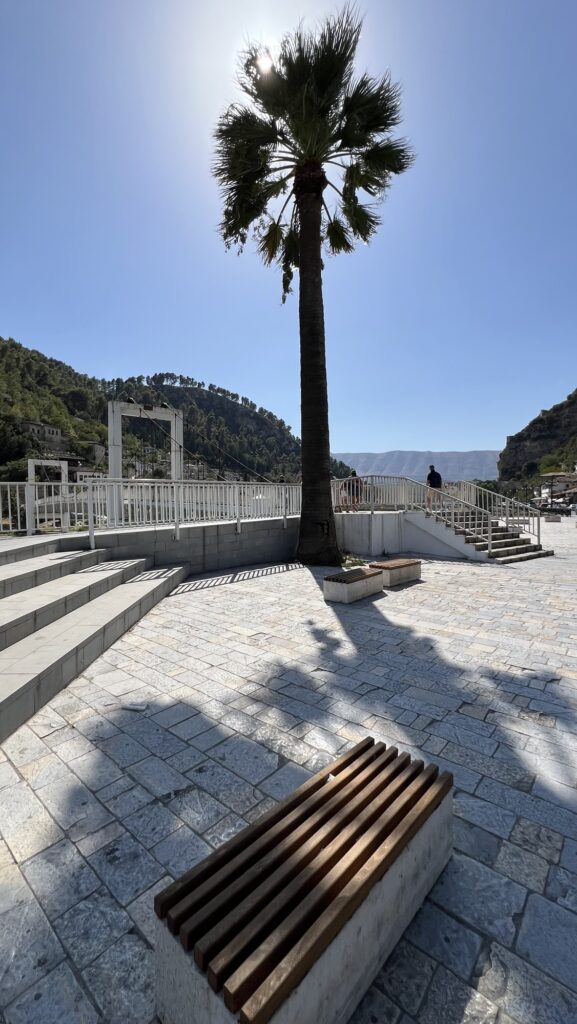
The sun was beating down strong, so I found a bench shaded by a giant palm tree to take it all in and meditate for a moment.
The Roman Empire, the Ottoman Empire, Communism, and now freedom. This nation has been through much and inhibited by turmoil — but finally seems poised for a spectacular blossoming, if it can find the right leadership and footing.
2,600 years of history, from Illyrian pottery to Livy’s legions to Enver Hoxha declaring Berat a “Museum City” in 1961. The city was also where Jews were hidden by Muslim and Christian families during World War II — 60 families concealed them in homes and basements. A Star of David can still be seen on the walls of the city’s main mosque. That’s the Berat I was sitting under, beneath a palm tree, with the Osum flowing below.
👅 Palate — Caramel Ice Cream Chaser
It got too hot and I walked toward an ice cream parlor I’d spotted earlier. Shaking off the sun is possible with a caramel ice cream chaser. It is calm and serene here — no ghouls or other souls around. We are reaching the end of summer, and I am reaching the end of my stay in Albania.
🧭 Wander — The Road Back
At 4:30 pm we headed back. Next Monday I depart to a new country, so I’m making the most of my last few days. Berat was a good choice — the kind of place that rewards the effort of the journey with enough history to sit with, under a palm tree, while the ice cream melts and empires feel close enough to touch.
By the Numbers
| Item | Amount (EUR) |
|---|---|
| Berat day trip — bus/guided tour | €25 |
| Moyo — bruschetta + musaka + water (1,200 ALL) | €12.63 |
| Ice cream — caramel | €1.51 |
| Day Total | €39.14 |
2,600 years of history. A city burned by Rome, rebuilt by Byzantines, fought over by Bulgarians, Serbs, and Ottomans. Jews hidden in basements and mosques. A river born from a giant’s tears. And one traveler, under a palm tree, with caramel ice cream, at the end of summer and the end of a month in Albania. Berat didn’t need to try hard. It just needed to be what it’s always been.
Leave a Reply