
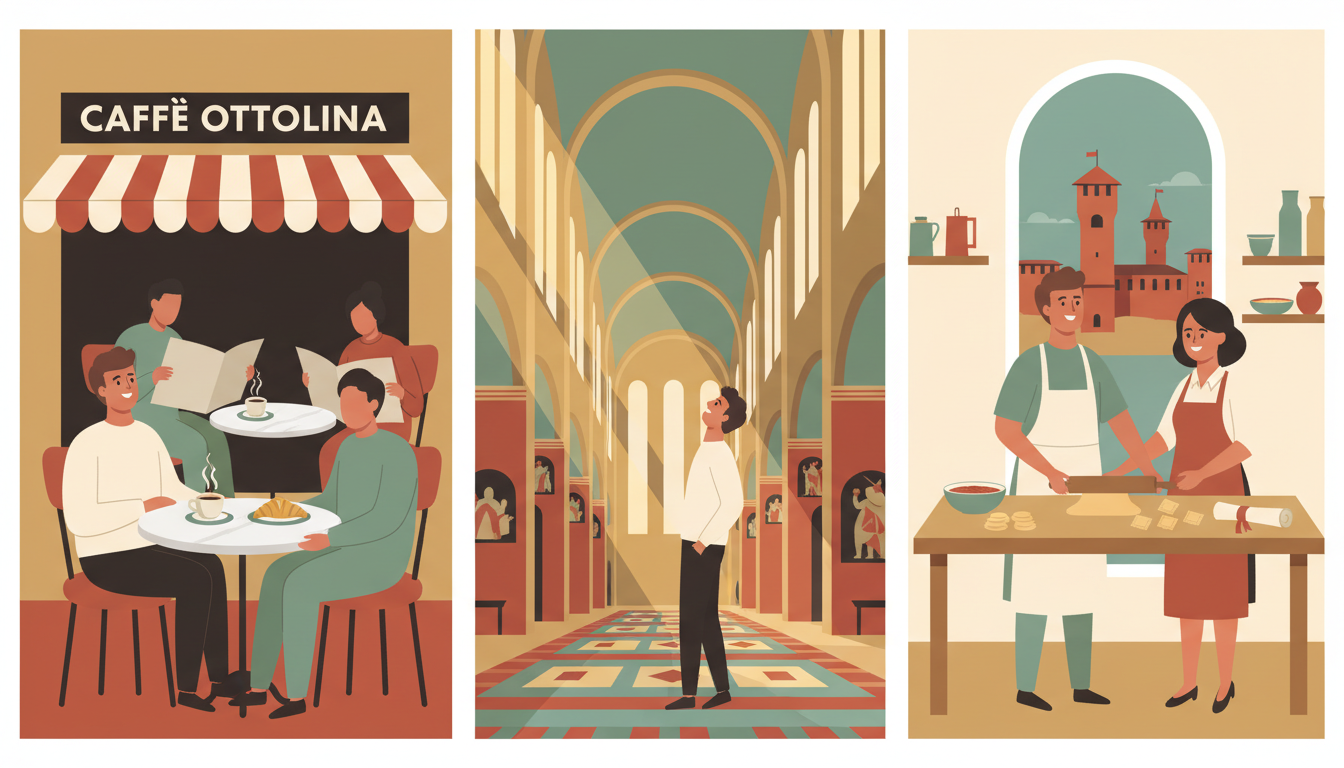
Milan. Day 2. Started the morning with a walk in the general direction of my noon cooking class — about 30 minutes west of the apartment. The kind of walk where you have a destination but no urgency, and the city reveals itself in the spaces between.
Coffee — Caffe Ottolina
Along the way I stopped at Caffe Ottolina. A nice, quaint coffee shop full of locals — always the best sign — so I had to stop and try a pastry and coffee. Both were excellent, and I fell in love with the shop. €5.0. Nice, friendly staff, great pastry, great coffee. What more could a morning ask?
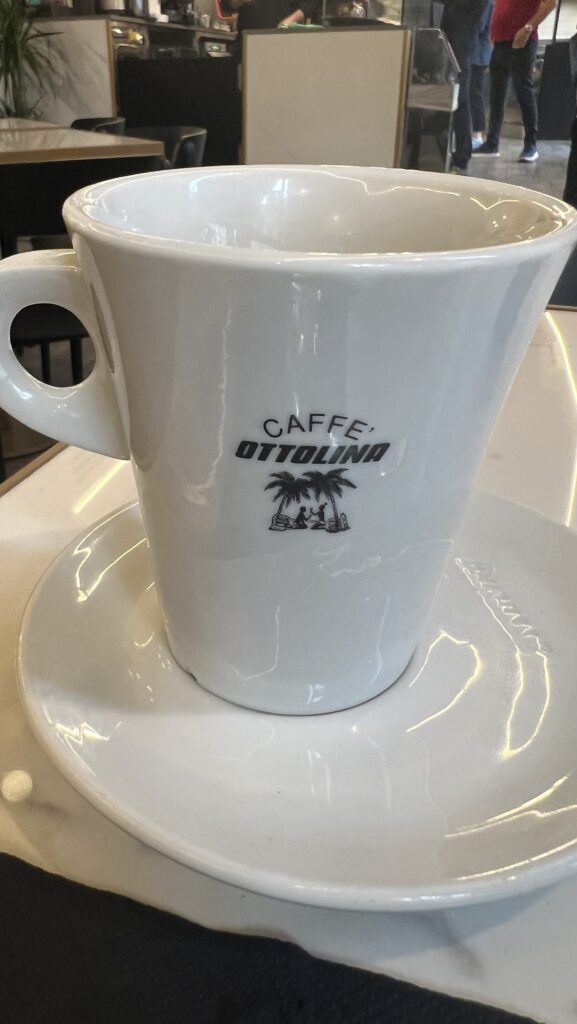
I did a quick Internet speed test: 153 Mbps down, 4 Mbps up. The thick walls in these old Italian buildings charge a heavy speed toll — excellent for atmosphere, terrible for uploads. Caffe Ottolina is a coffee shop, not a co-working space, and that is exactly how it should stay.
Sanctuary — Santa Maria delle Grazie
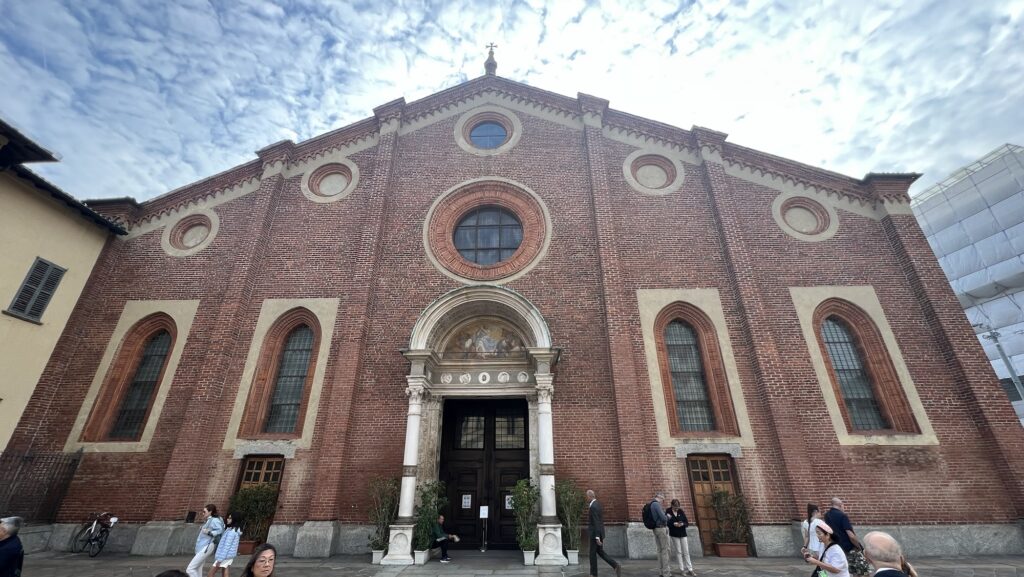
My next stop was Basilica di Santa Maria delle Grazie — a UNESCO World Heritage site, most famous for housing Leonardo da Vinci’s Last SupperCenacolo tickets, the church itself is worth the visit.
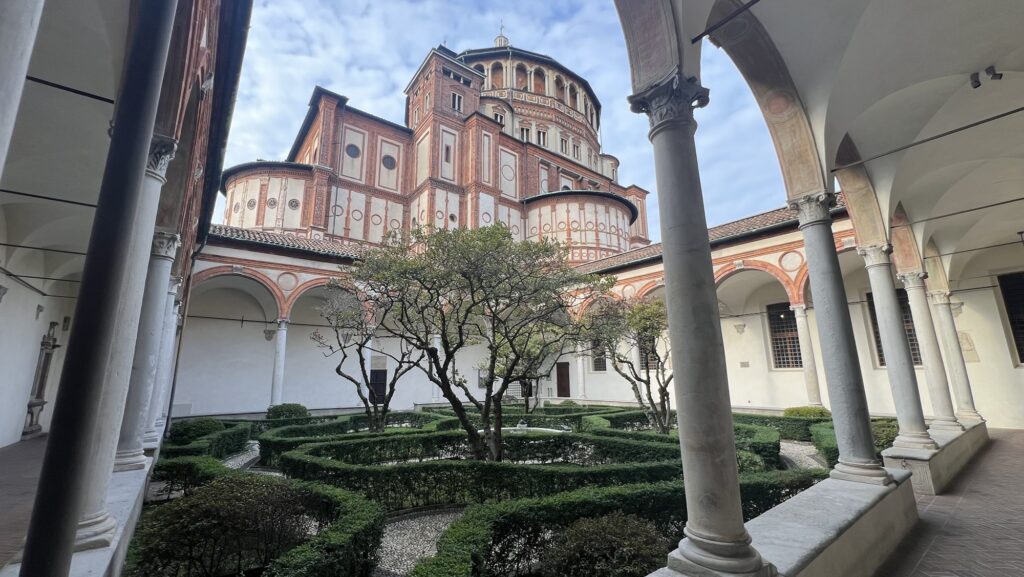
Built between 1463 and 1497 under the patronage of Duke Francesco I Sforza and later his son Ludovico (who made it the Sforza family burial site), the church is a masterpiece of Lombard Renaissance architecture. The apse and crossing were designed by Donato Bramante in the 1490s — the same architect who would later design St. Peter’s Basilica in Rome. Ludovico’s wife, Beatrice d’Este, was buried here in 1497.
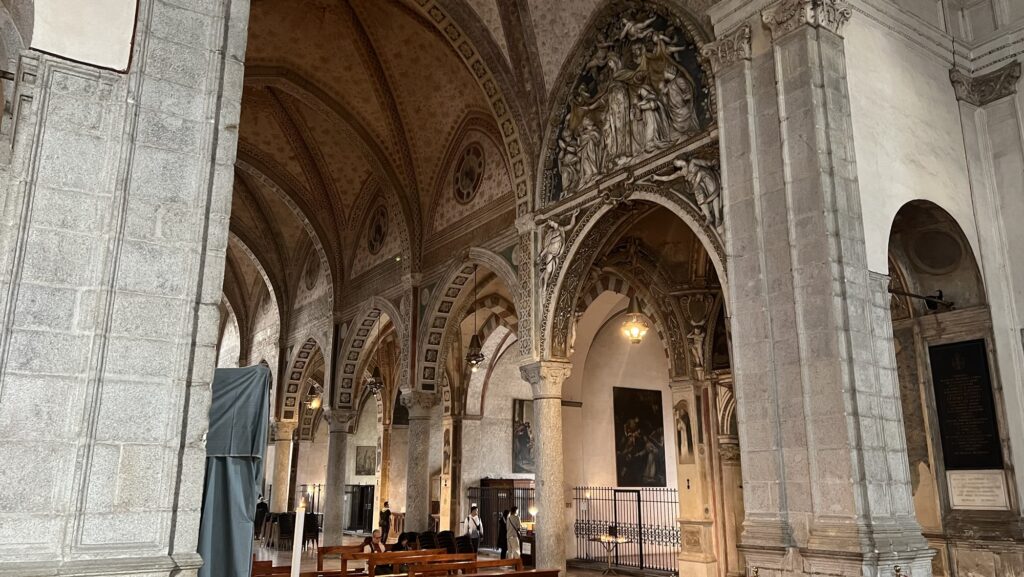
What struck me most were the side chapels — in Italian, cappelle laterali or, more specifically here, cappelle gentilizie (family chapels). There are 14 of them, seven along each side aisle. Wealthy Milanese families commissioned them as private spaces for prayer, family burials, and religious art. Many surfaces were frescoed — pigment painted onto prepared plaster — and several chapels contain work by Gaudenzio Ferrari and other Renaissance artists.
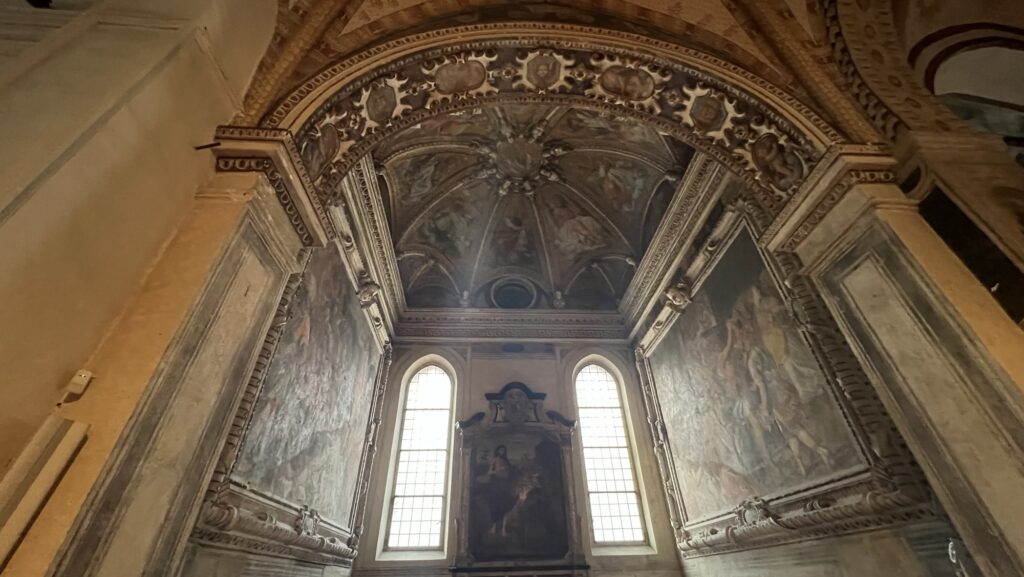
The Chapel of the Holy Crown features Ferrari’s Stories of the Passion (c. 1539), while the Chapel of the Adoring Virgin also bears his hand. These chapels once housed a Titian altarpiece — The Crowning with Thorns — but Napoleon’s troops requisitioned it in 1797, and it now hangs in the Louvre. The church, like so many in Milan, was badly damaged by Allied bombing in 1943 — the refectory roof and walls collapsed, though The Last Supper miraculously survived behind protective sandbags.
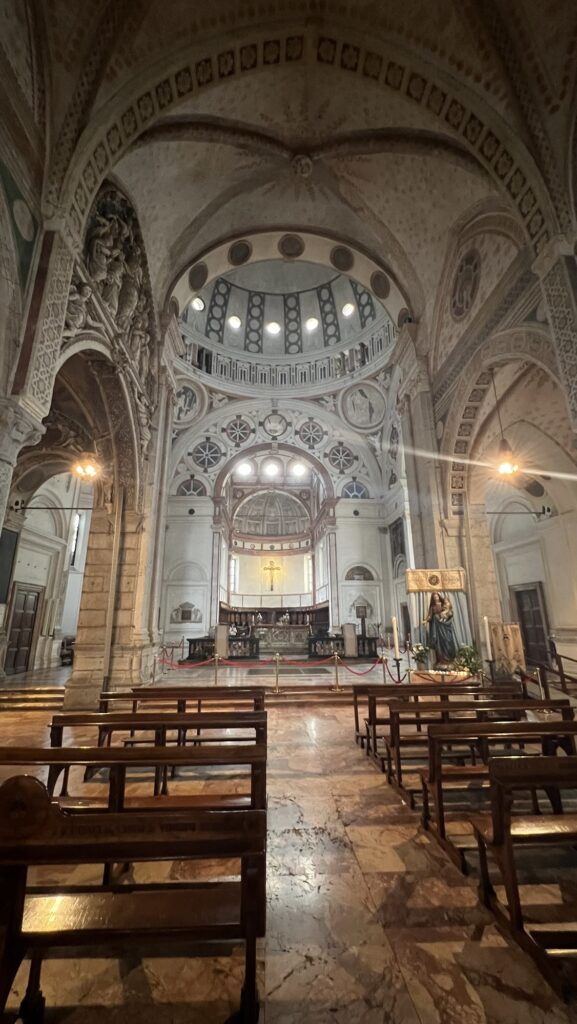
I sat and meditated for a while. The church is large and voluminous inside — light, airy, the kind of space that encourages stillness. A good place to sit with your thoughs before a day of making pasta.
Saint — San Vittore al Corpo
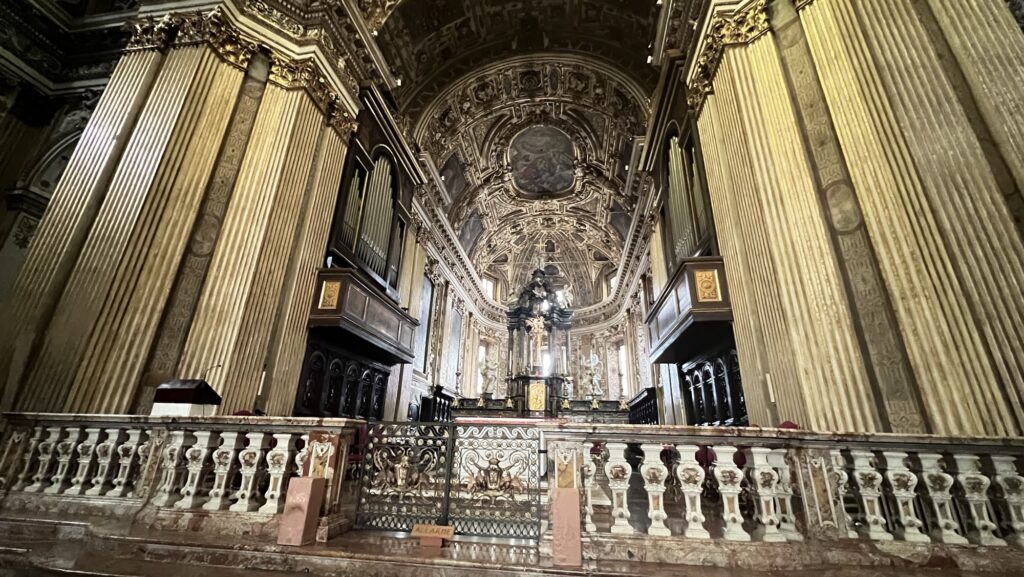
I then headed to another nearby church, Basilica di San Vittore al Corpo. Tracing its origins back to a Roman temple (likely dedicated to Hercules), the basilica was built in the 4th century and enlarged in the 8th to house the relics of saints Vittore and Satiro. A Benedictine monastery was soon attached.
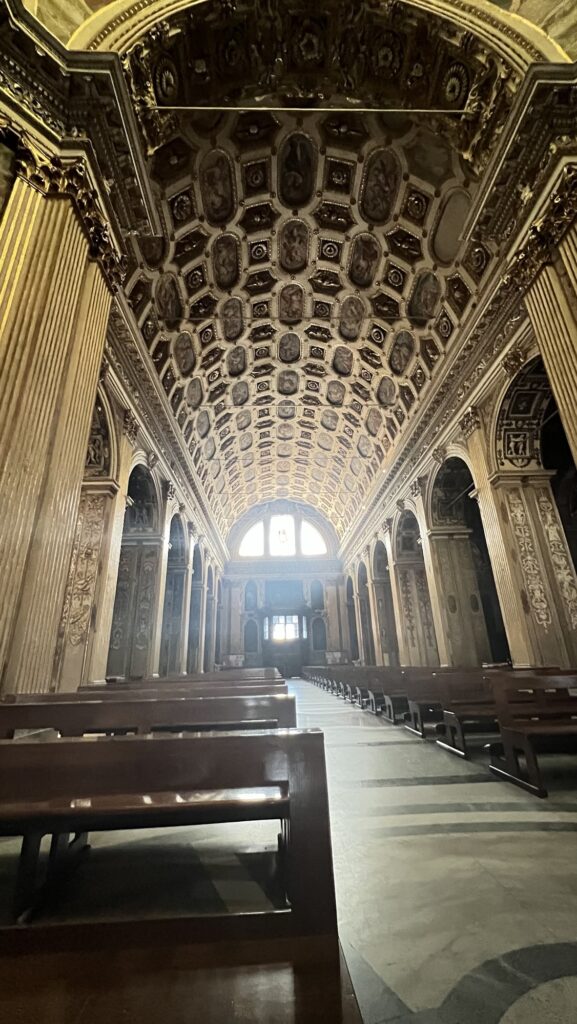
The interior decorations are more intricate and elaborate than Santa Maria delle Grazie — a Latin cross plan with three naves, Baroque ornamentation, and frescoes from the 16th and 17th centuries by artists including Procaccini. The lights were off and the church was empty except for the maintenance woman sweeping the floors. Two churches, two completely different experiences: one active and reverent, the other silent and solitary. Both sacred in their own way.
Science — Museo Nazionale Scienza e Tecnologia
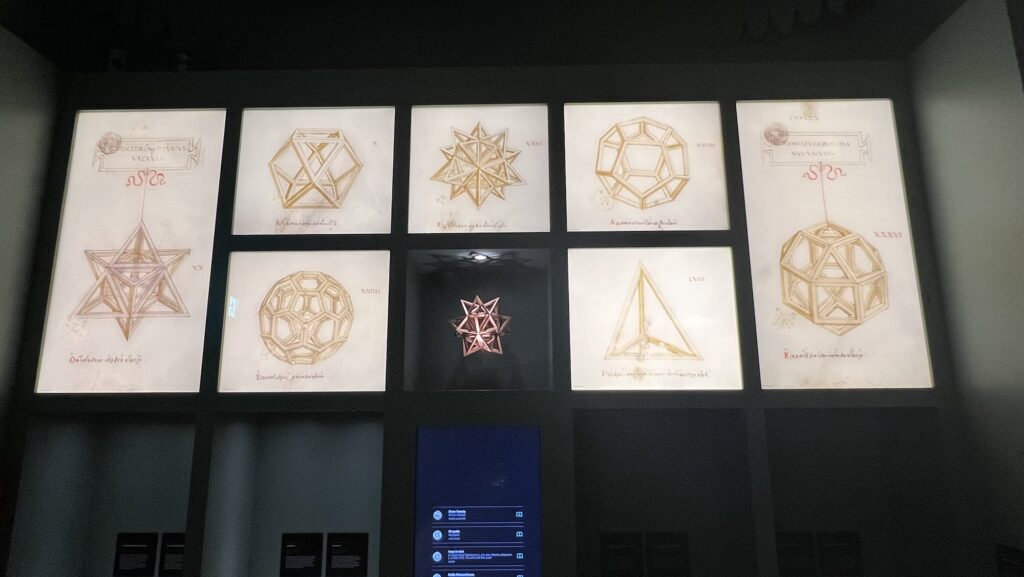
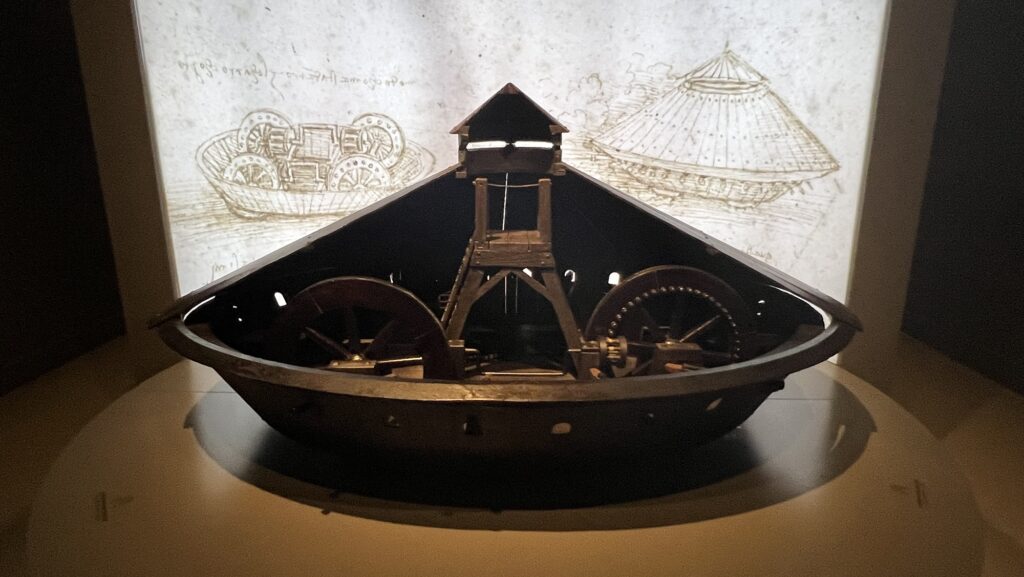
Afterwards I headed to the Museo Nazionale Scienza e Tecnologia Leonardo da Vinci. There is a dedicated Leonardo exhibit and I was mesmerised by this man’s level of genius. It is clear that da Vinci had the ability to think beyond normal dimensions — to come up with so many inventions, improvements, and discoveries centuries ahead of their time. Flying machines, hydraulic systems, anatomical studies, war engines, architectural designs. One mind containing multitudes.
Palate — Tagliatelle, Ravioli, Tiramisu
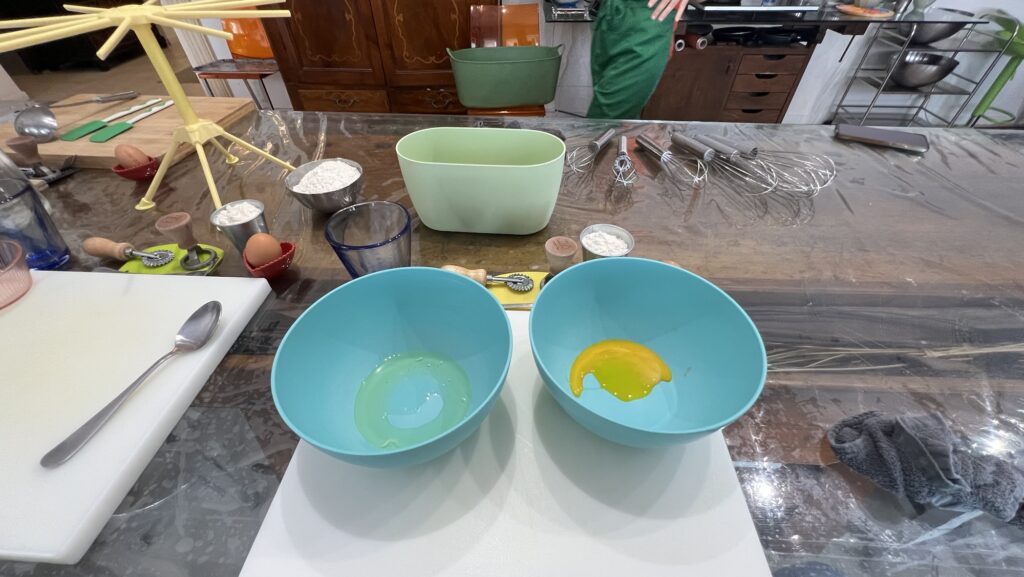
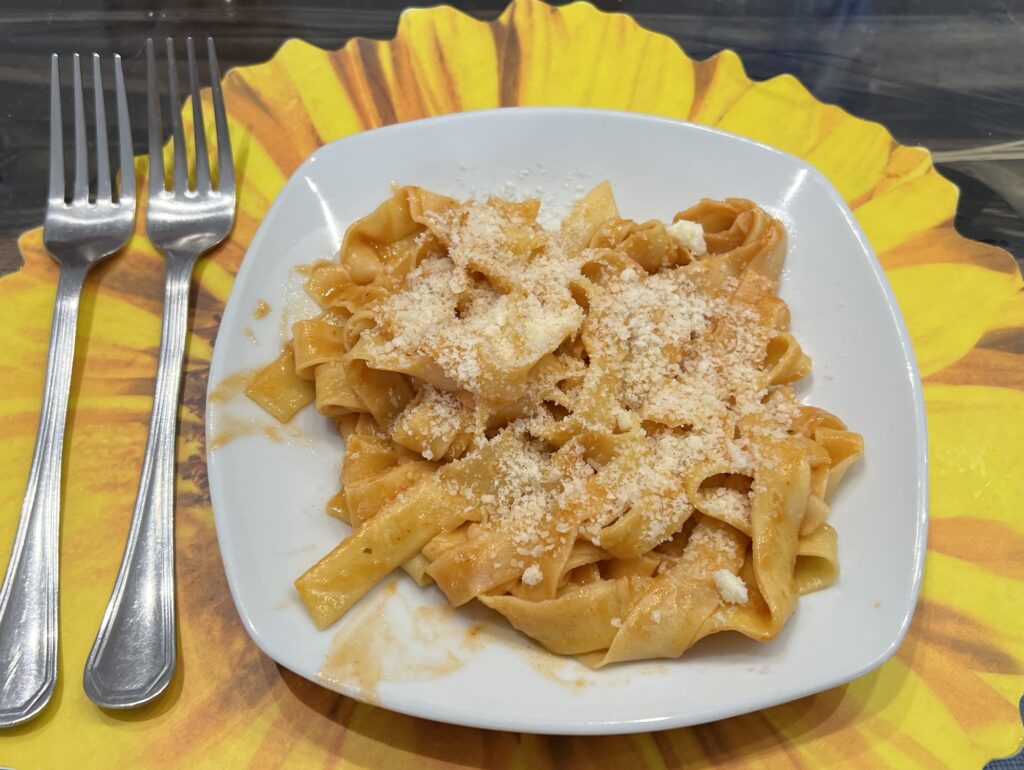
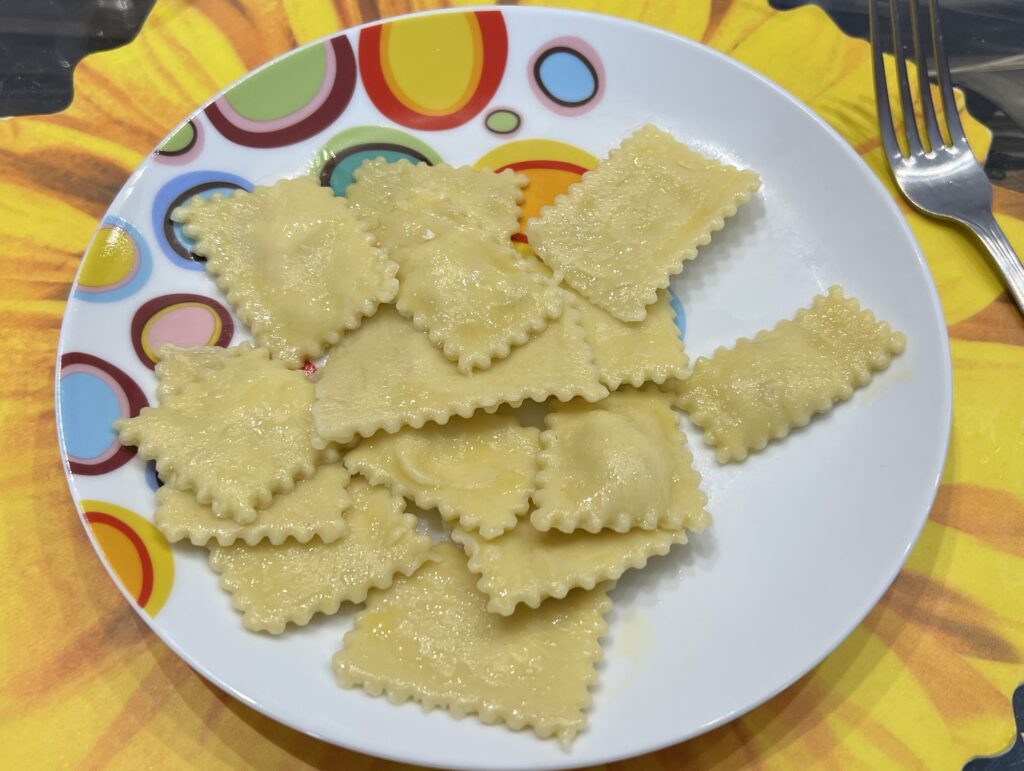
My cooking class started at noon — $73.0 USD. The plan: pasta, tiramisu, and ice cream all from scratch. Connie, our instructor, walked us through creating tagliatelle in tomato sauce and ravioli stuffed with cheese and garlic sage sauce. She also shared tales of her family ancestry and experiences making pasta since she was five years old. A lifetime of flour-dusted hands, passed down and now shared with strangers in a Milan kitchen.
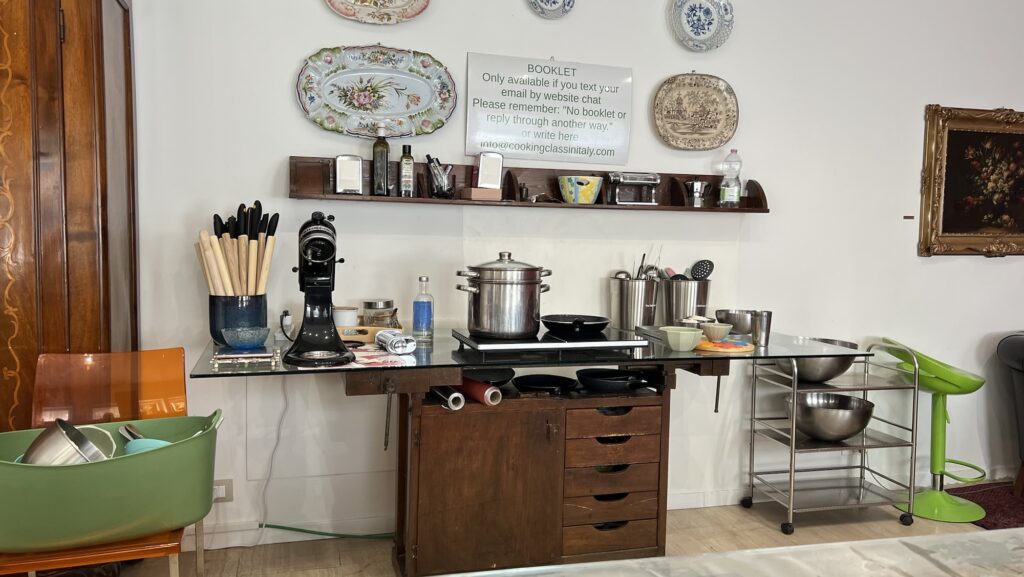
It was fulfilling creating the dishes from raw ingredients — eggs, flour, water, tomatoes, cheese, sage — transformed by technique and patience into something that tasted of Italy in the deepest sense. The final dishes had excellent fresh flavour. Tiramisu from scratch, ice cream from scratch. At the end, each student was awarded a certificate. I am now officially certified in pasta-making by an Italian grandmother. This carries more weight than most of my academic qualifications.
For dinner I went to RiceExpress and had a quick fried rice dish — €9.0. A humble meal after the pasta triumph. Tonight I have to pack and tomorrow (Saturday) I fly to Amsterdam. Milan gave me two days: one of marble and masterpieces, one of churches and cooking. Both felt like the real city, not the tourist version.
By the Numbers
| Item | EUR |
|---|---|
| Coffee + pastry (Caffe Ottolina) | €5.0 |
| Cooking class ($73.0 USD) | €67.16 |
| Dinner (RiceExpress — fried rice) | €9.0 |
| Total | €81.16 |
Museum entry costs to come.
Leave a Reply