
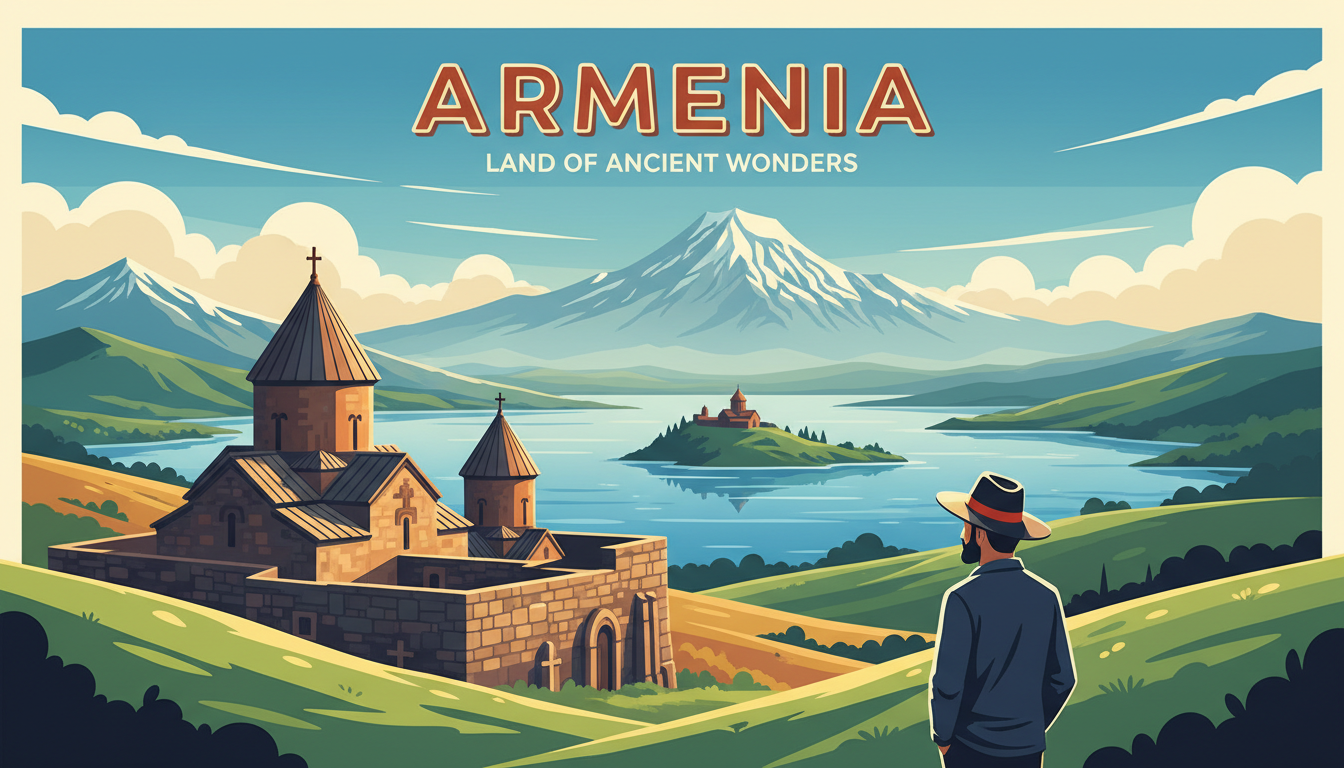
Armenia. Day 1. The weekend trip I’d been planning since Day 15 finally began. Our guide Paga and driver Temo collected us in Tbilisi aboard bus 43. We pulled out at 7:05 AM — early enough that the city was still shaking off sleep. By nightfall, I’d cross two borders, climb to a 10th-century UNESCO monastery, stand on the shores of one of Eurasia’s largest high-altitude lakes, and end the day with lamb kebabs and flatbread in Yerevan.
🛂 Two Borders
First stop: Georgian passport control. The officer studied my passport photo, then studied me, then studied the photo again. I’ve lost about 30 kilograms since I got that passport. He scoffed — not hostile, just the universal bureaucratic sound of “this doesn’t add up.” After an extended assessment, he stamped it and waved me through. A Pakistani national on our bus wasn’t so lucky — he was denied exit from Georgia on the basis that Armenia wouldn’t admit him. The arbitrariness of borders, witnessed in real time.
Armenian passport control was less eventful. Stamps, nods, onward. Two countries, two immigration experiences, five minutes apart.
🙏 Haghpat Monastery
Within Armenia, our first stop was Haghpat Monastery — a UNESCO World Heritage site perched high in the mountains of the Lori region. The complex was founded in 976 AD by Queen Khosrovanush, wife of the Armenian King Ashot III the Merciful, during the golden age of the Kiurikian dynasty. The monastery flourished from the 10th to 13th centuries as a major center of learning, and its architecture represents a unique blending of Byzantine ecclesiastical design with the traditional vernacular building of the Caucasus.
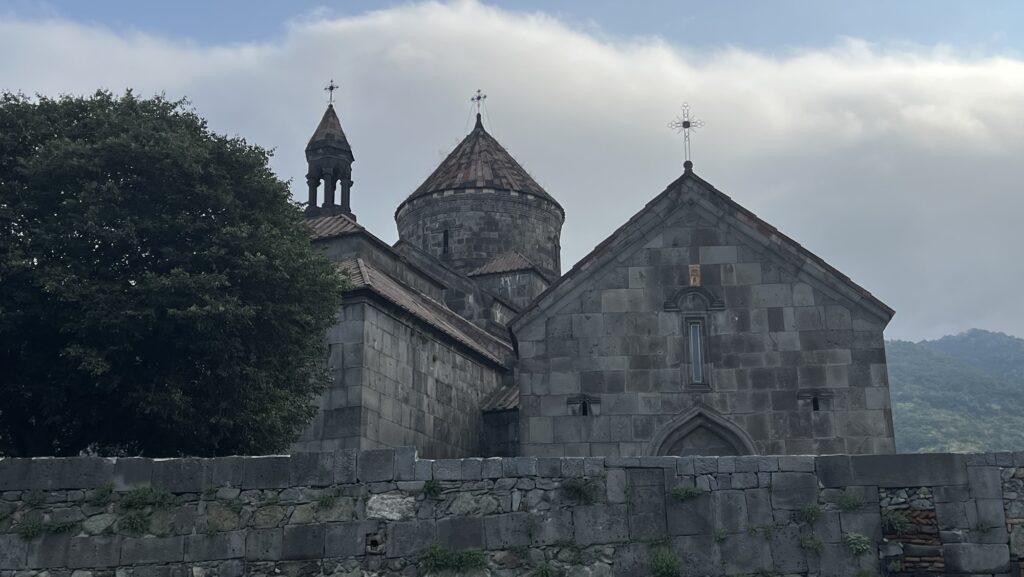
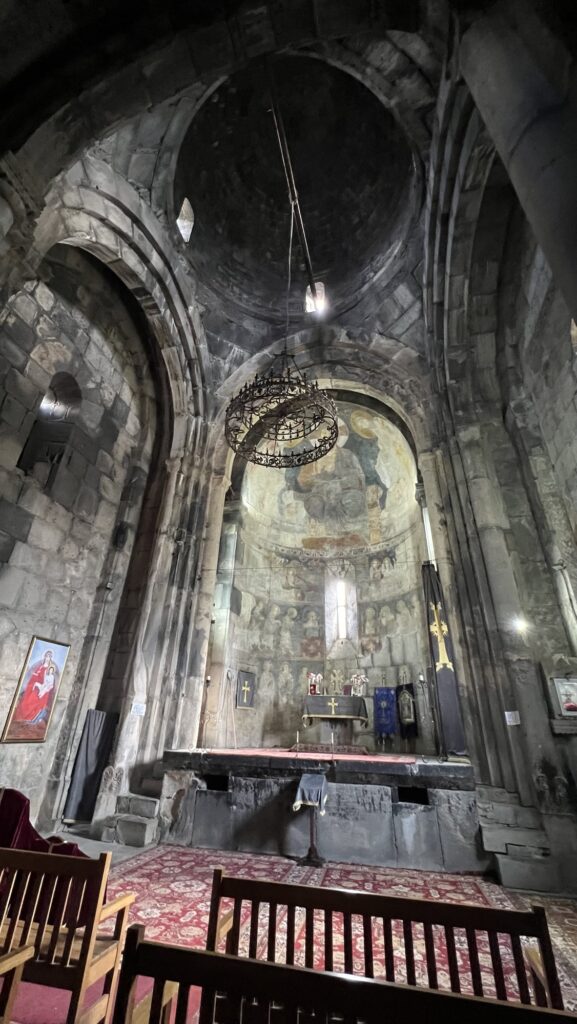
The complex includes a narthex, two corridor-sepulchers, a refectory, a scriptorium, the Chapel of Hamazasp, a belfry, several chapel-tombs, and khachkars — the distinctive Armenian cross-stones carved with intricate patterns. The main church is distinguished by its integrated interior and vast dominating dome. The earliest layer of frescoes has survived — Christ enthroned in the main apse, scenes of the annunciation, nativity, and baptism painted below.
The air was chilled and serene. There was very little noise — almost as if a church service were in session and everyone respectfully remained silent. The green, lush mountains surround the monastery on all sides, adding to the beauty and stillness. After 90 minutes of hectic driving through mountain roads, I was at peace. The air was fresh and clean. I picked up an Armenian flag pin — 1,000 AMD — and pinned it to my world traveler hat, joining the collection.
🏔️ Dilijan & Lake Sevan
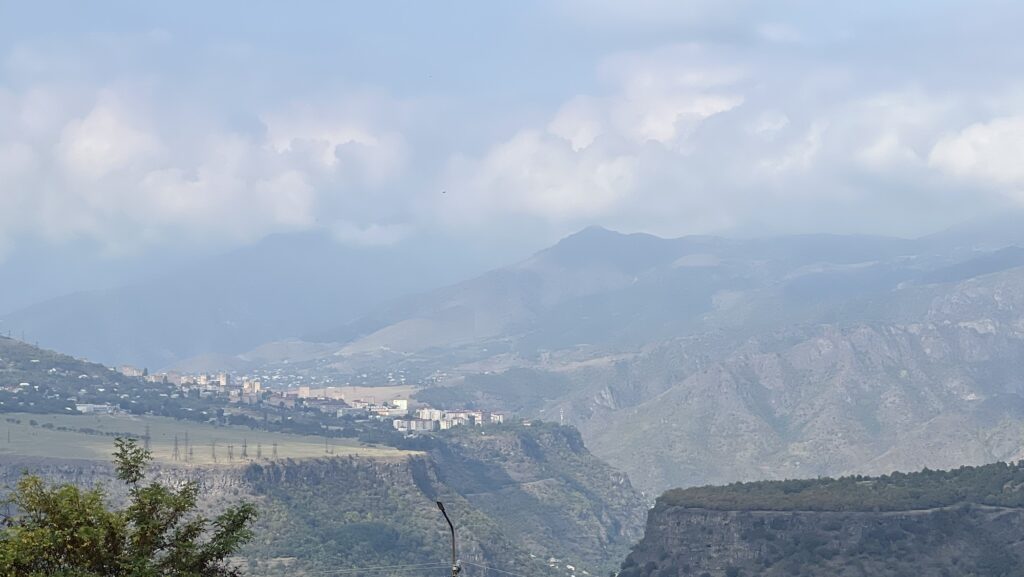
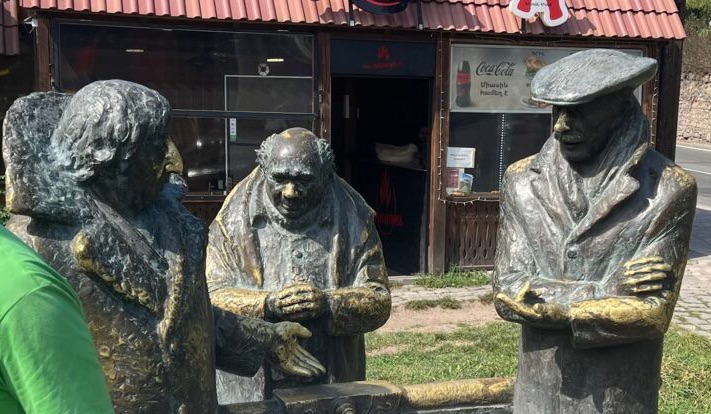
Next was Dilijan — a small town known mostly for its scenic beauty and a famous statue of an Albanian, a Russian, and an Armenian, commemorating a friendship between the three nations. A nearby lake is surrounded by majestic mountains. It was a quick stop to stretch our legs — not much here beyond the scenery, but the scenery was enough.
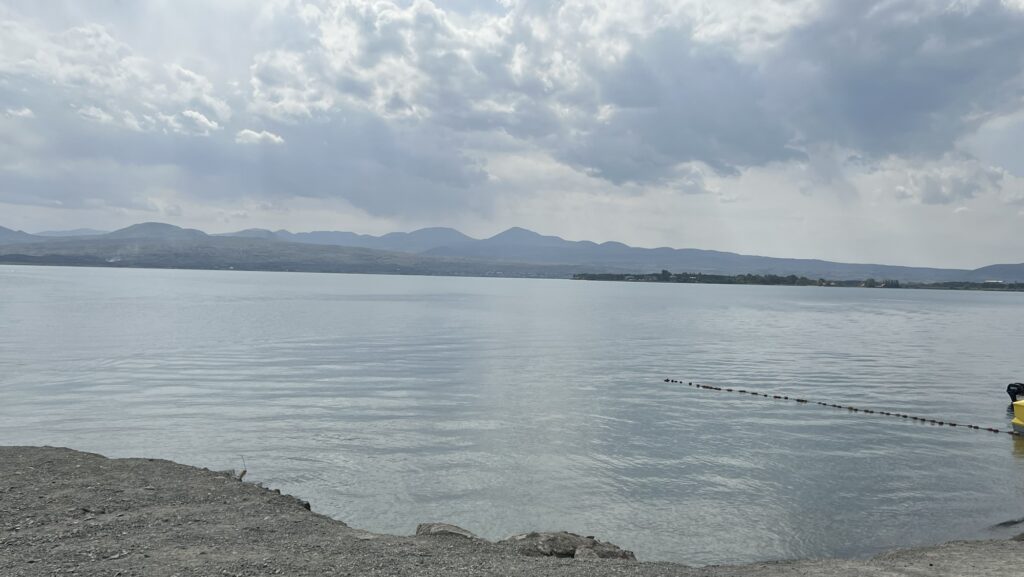
Then came Lake Sevan — immense, shimmering, one of the largest freshwater high-altitude lakes in Eurasia. It sits at 1,900 metres above sea level and covers roughly 1,240 square kilometres — about 5% of Armenia’s entire territory. The numbers don’t do it justice. Standing on its shore feels like standing at the edge of an inland sea.
On a nearby hill sits Sevanavank Monastery, founded in 874 AD by Princess Mariam, daughter of King Ashot I. Originally built on an island, the monastery became a peninsula after Stalin-era water diversion projects dropped the lake level by about 20 metres. It was a strict monastery — French explorer Jean-Marie Chopin visited in 1830 and recorded rules forbidding meat, wine, youth, and women. Two churches remain: Surp Arakelots (Holy Apostles) and Surp Astvatsatsin (Holy Mother of God).
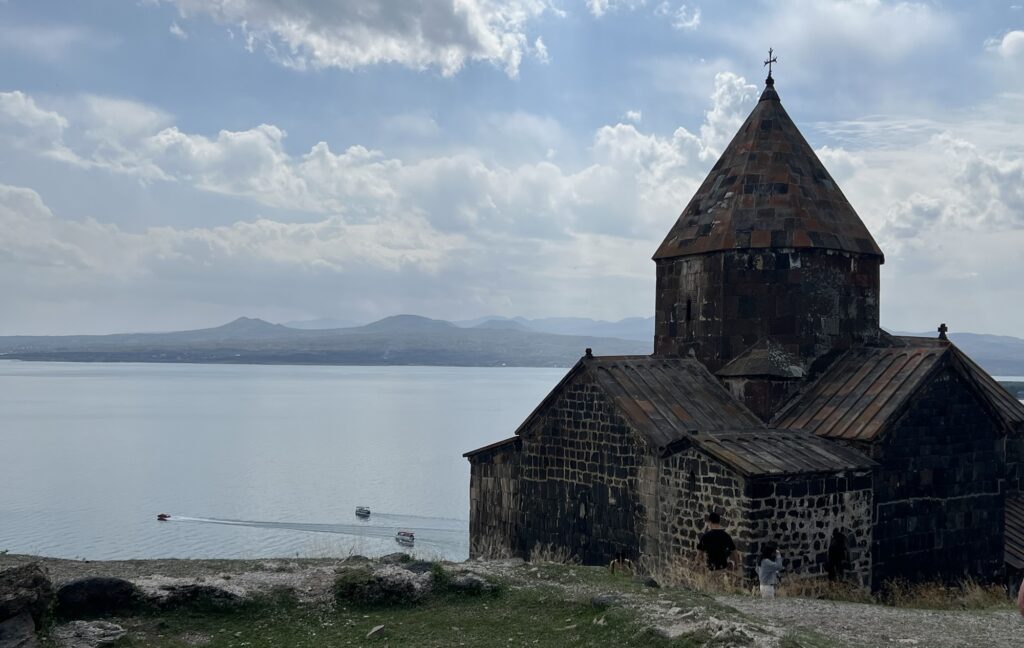
There is peace and serenity here, along with majestic views of the surrounding mountains. We had lunch at a restaurant overlooking the lake — but it was a mediocre tourist-trap meal. The kind where the view is spectacular and the food is an afterthought. I’ve learned to accept this trade-off in Georgia and Armenia both: scenery this good makes restaurants lazy.
🗽 Mother Armenia & The Cascade
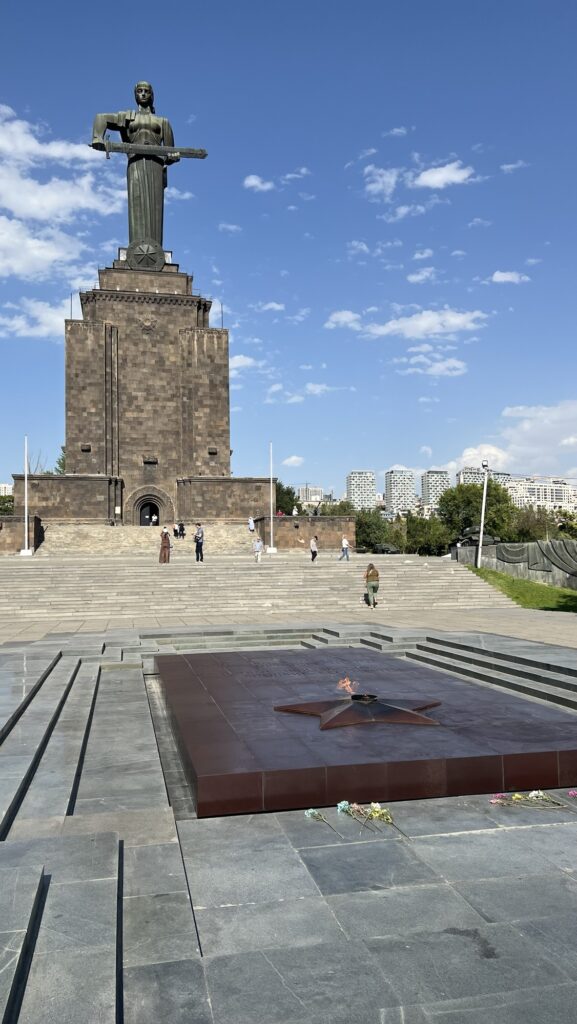
Our next stop was Victory Park and the Statue of Mother Armenia in Yerevan. The statue stands 51 metres tall including its pedestal, a commanding figure overlooking the capital. But here’s the twist: the current statue replaced a monumental statue of Joseph Stalin in 1962. The original Stalin statue was erected in 1950 as a World War II victory memorial; de-Stalinization under Khrushchev saw it removed and replaced with Mother Armenia — a woman holding a sword, symbolizing peace through strength. The brown stone used for the monument was taken from local Armenian quarries and has a distinctive, warm color that catches the late afternoon light.
Like the Mother of Georgia in Tbilisi, the Mother of Armenia is immense — a maternal guardian watching over her city. Both statues are Soviet-era monuments repurposed or recontextualized for national identity. Two Caucasus nations, two iron women, two different relationships with the same history.
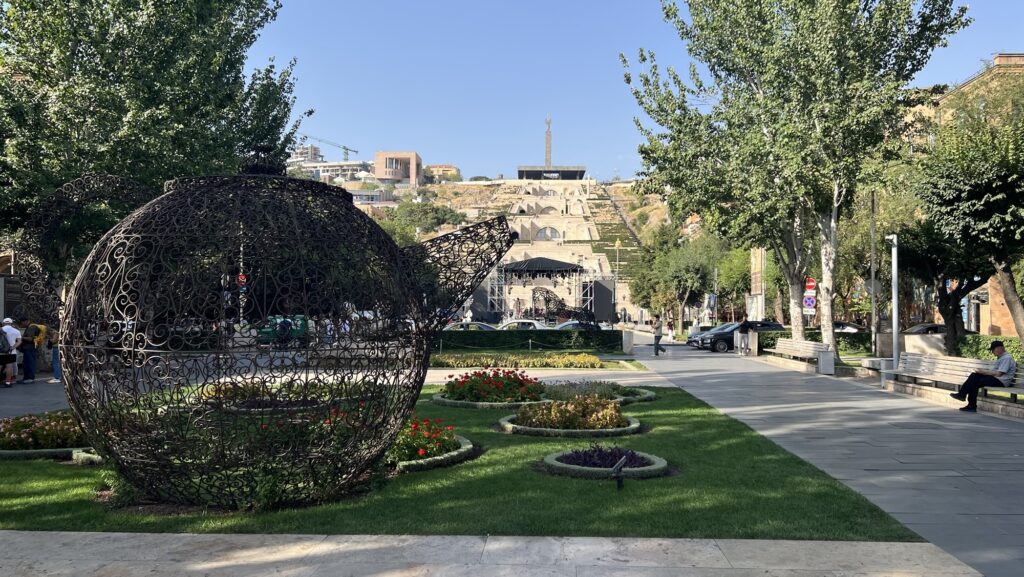
Our last tour stop was the Cascade (Armenian: Կասկադ, Kaskad) — Yerevan’s huge terraced staircase with gardens, fountains, sculptures, and views stretching across the city toward Mount Ararat. It’s an impressive structure. I didn’t climb it. After crossing two borders and climbing several mountains today, my legs filed a formal objection and I honored it.
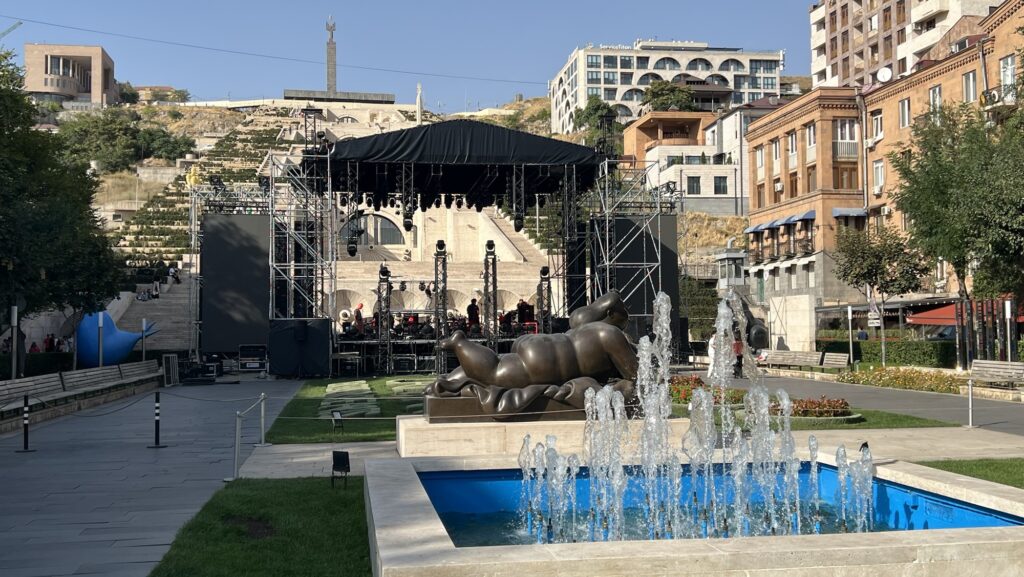
👅 Palate — Boho by Status
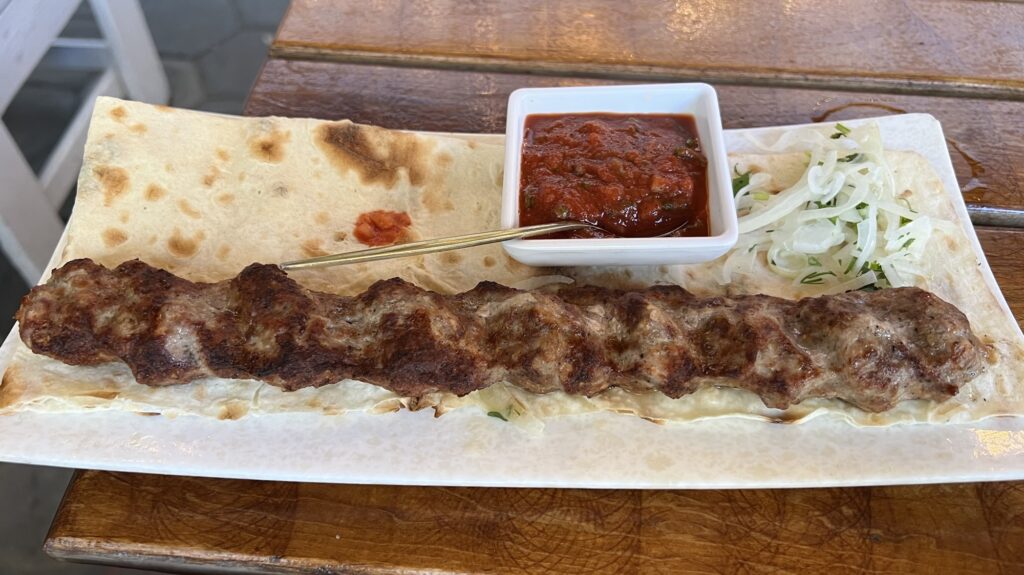
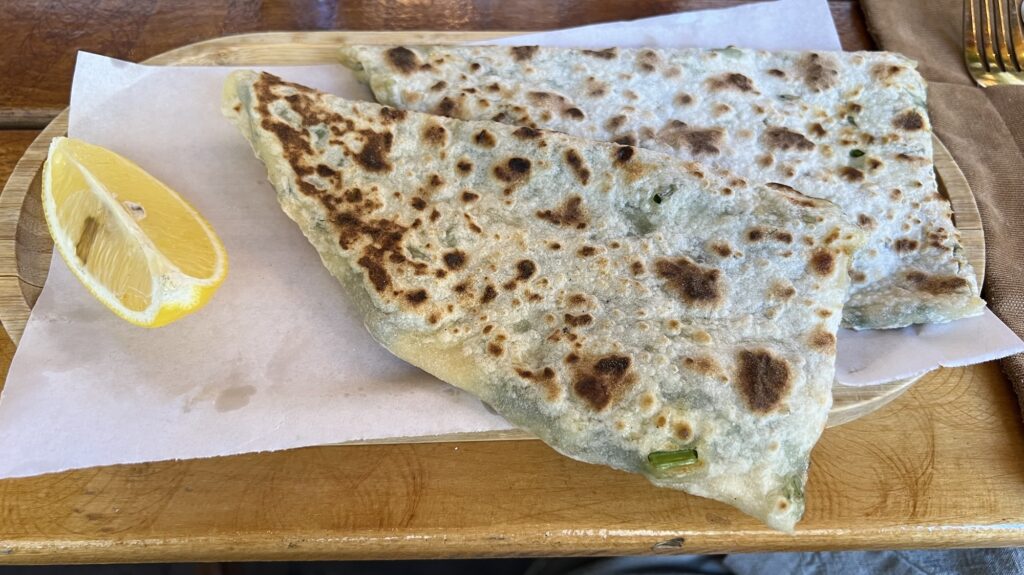
I bid the tour group farewell, checked into my hotel, took a quick shower, and headed out to a highly-rated restaurant: Boho by Status. I asked the waiter for a traditional Armenian recommendation. He delivered: lamb kebab and flatbread filled with herbs and vegetables. After the disappointing Sevan lunch, this was redemption. The lamb was tender and well-seasoned, the flatbread fresh and fragrant. A proper meal to close a proper day.
📶 A Note on Armenian Internet
I’ll have a separate post about the Saily eSIM experience, but for now: I spent $8.99 USD for a 3-day, 1 GB pass for my weekend stay. While the internet technically works, speeds have been very slow. The infrastructure here seems to need a refresh and upgrade. Something to keep in mind if you’re planning to work remotely from Armenia.
By the Numbers
| Item | AMD | EUR (≈) |
|---|---|---|
| Armenian flag pin (Haghpat) | 1,000 | €2.38 |
| Lunch (Sevan — tourist trap) | 5,000 | €11.90 |
| Dinner (Boho by Status) | 3,960 | €9.43 |
| Saily eSIM (3 days, 1 GB) | $8.99 USD | |
| Day tour (Tbilisi→Yerevan) | — | — |
| Total (excluding tour & eSIM) | 9,960 | €23.71 |
Leave a Reply