
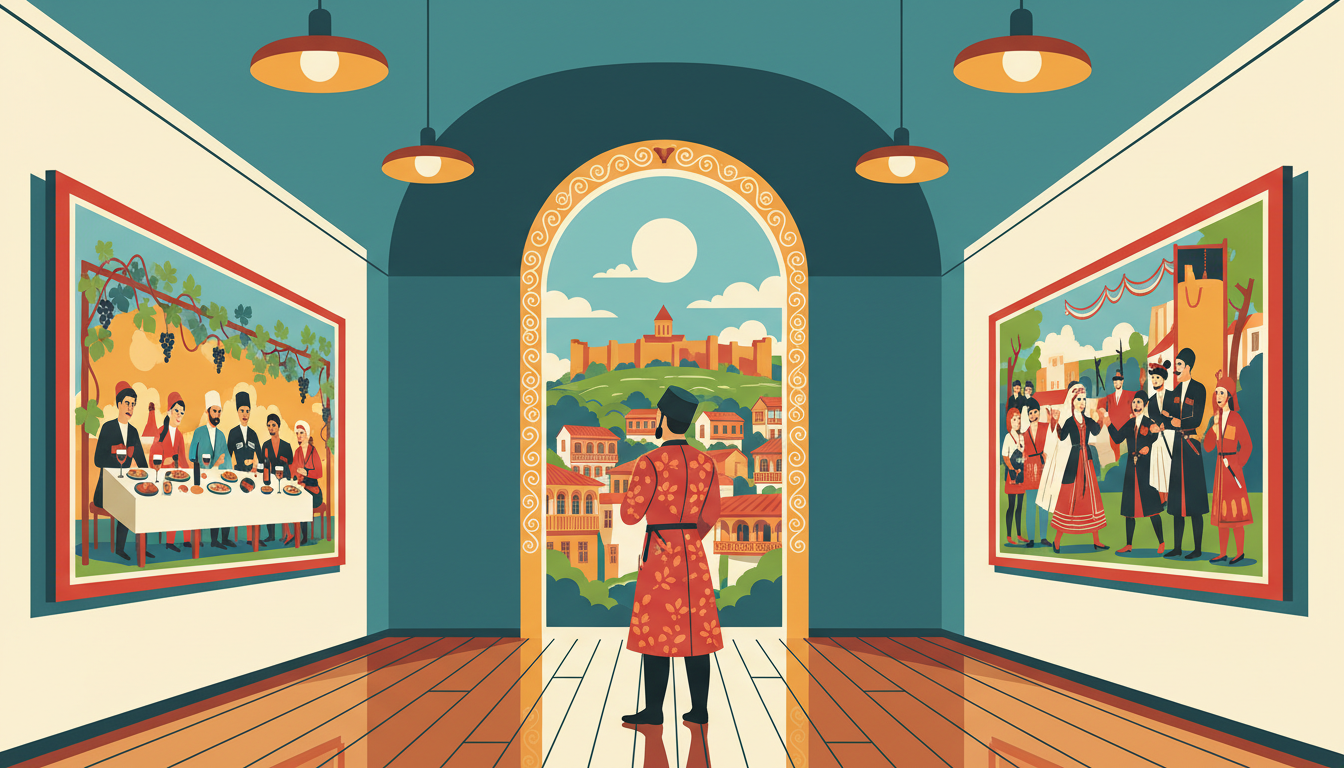
I skipped breakfast and went straight to the museums. Two of them, back to back, on a Tuesday morning in Tbilisi. By the time I stumbled out of the second one, hunger had progressed from a polite suggestion to a physical ache. But in the space between — three and a half hours of Georgian art spanning five centuries — I found something I wasn’t expecting. Something that made me rethink what I thought I knew about how a nation carries its history.
👁 Vista — Georgian National Museum
25 GEL. The Georgian National Museum on Rustaveli Avenue is housed in a grand neoclassical building that once served as the Caucasian Museum, founded in 1852. It’s not a crowded museum — on this Tuesday morning, I had the galleries nearly to myself. Unfortunately, the first floor was closed to re-staging art and will re-open on Saturday so I’ll need to go back.

The first artist to stop me was Mose Toidze (1871–1953). His portraits are sad, somber things — everyday Georgian life rendered not as pastoral idyll but as quiet endurance. A woman at a loom. A man at rest. Faces that don’t smile but don’t complain either. There’s dignity in the sadness, but it’s sadness nonetheless.
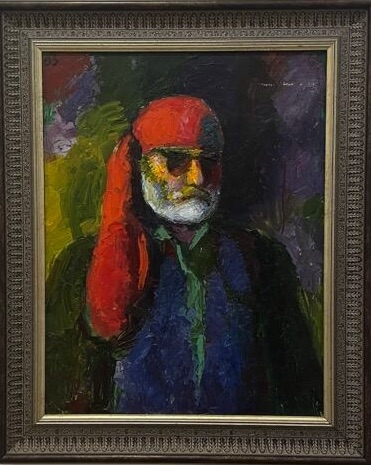
And then — Pirosmani.
Niko Pirosmanashvili (1862–1918), known simply as Pirosmani, is Georgia’s most celebrated painter. Self-taught. An orphan from the village of Mirzaani who moved to Tbilisi as a child, worked briefly as a railway conductor, opened a dairy shop, decorated it with his own hand-painted signboards, and then — after the turn of the century — abandoned everything to become a wandering artist. He painted signboards and pictures for tavern owners, for small fees, on untreated black oilcloth. He died in 1918. His grave is unknown.
And yet. In 1913, his works hung alongside Chagall, Malevich, Larionov, and Goncharova at the avant-garde Moscow exhibition Mishen (Target). In 1969, the Louvre exhibited his paintings. Then Vienna, Berlin, Tokyo. In 1972, Picasso himself etched a portrait of the Georgian artist for a monograph published in Paris. The orphan who painted on oilcloth for tavern keepers became, posthumously, a giant of 20th-century art.
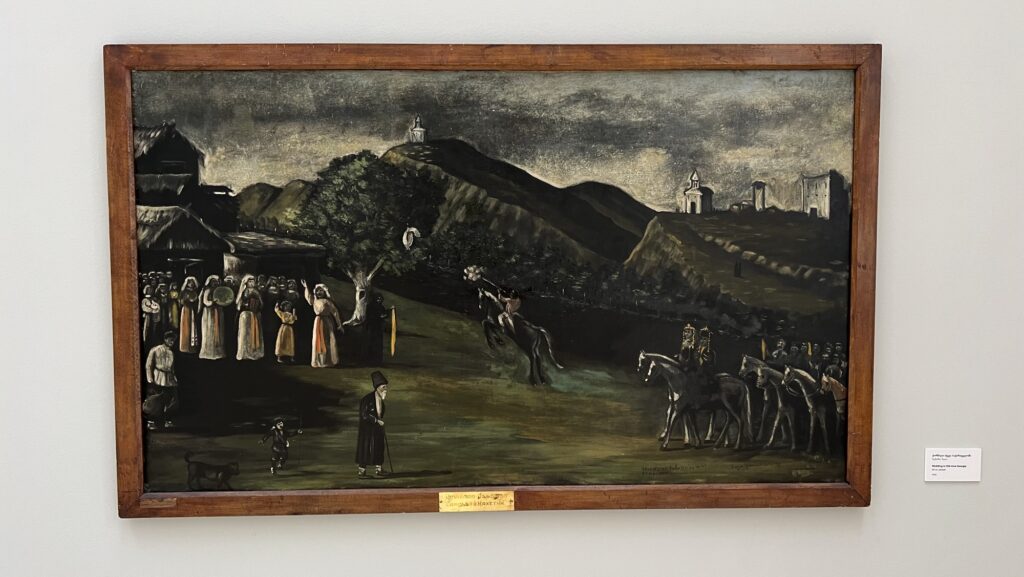
What makes Pirosmani’s work extraordinary is the economy of means. A few precise brushstrokes. The slightest gradations of color. The untreated black oilcloth serving as both surface and space, material and image. His paintings — Wedding in Old-Time Georgia, Feast on the Bank of the Tskhenistskali River, Feast of the Five Noblemen, The Childless Millionaire and the Poor Woman with Children — fuse easel and monumental painting into something that feels both intimate and epic. He is not a “naive” artist, the museum text insists. He is a true painter. The distinction matters.
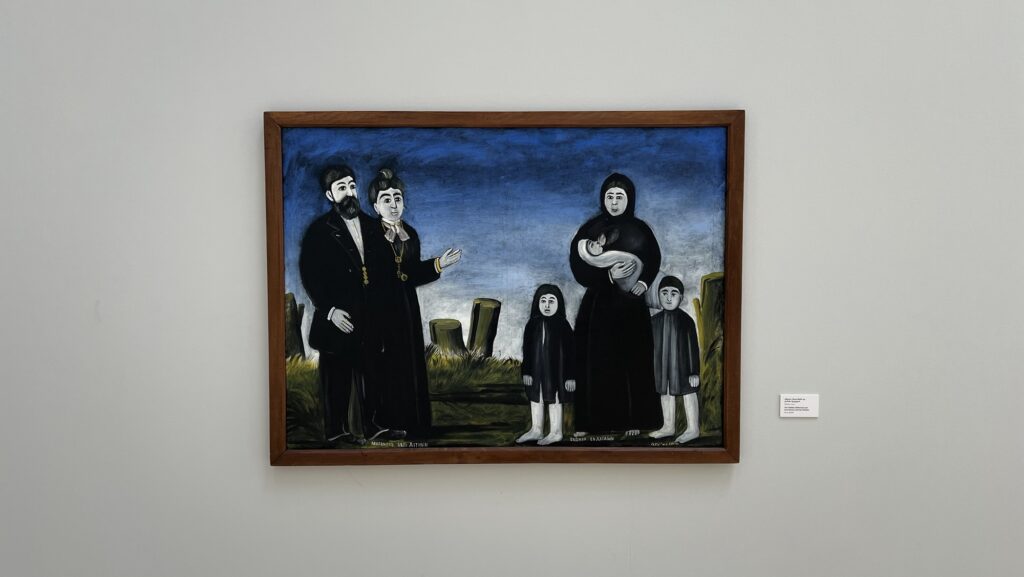
The defining feature of Pirosmanashvili’s art is his ability to model form convincingly with minimal means: a few precise brushstrokes, the slightest gradations of colour.
— Georgian National Museum
Wedding in Old-Time Georgia is the one that stays with me. Figures arranged around a table, a ceremonial stiffness to their postures, faces that are both present and distant. It’s not a joyful wedding. It’s a wedding observed — by someone who knew the participants, who understood what the ceremony meant and what it cost.
👁 Vista — Georgia Museum of Fine Arts
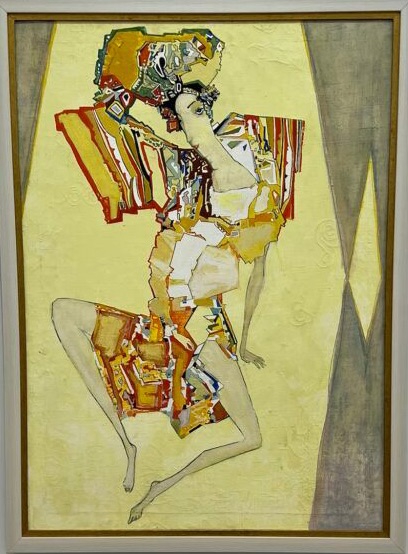
40 GEL. Start at the 5th floor and work your way down — that’s the instruction, and it’s good advice. The Georgia Museum of Fine Arts is, I will say it plainly, perhaps the world’s most underrated art museum. I had the entire building to myself. Not a single other visitor. For an hour and a half, I wandered through floor after floor of Georgian painting, sculpture, and drawing, with no company but the art and my own footsteps.
The elevator doors open on the 5th floor and I am bombarded by vivid neon greens on black. Natela Iankoshvili (1918–2007). Her canvases hit like a voltage change — abstract expressionism filtered through a Georgian sensibility, colors that feel radioactive. Have I landed in Oz? The contrast with Pirosmani’s quiet black-oilcloth world, just an hour earlier, is almost violent.
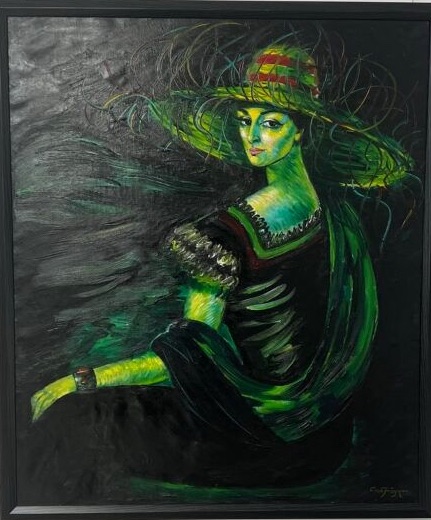
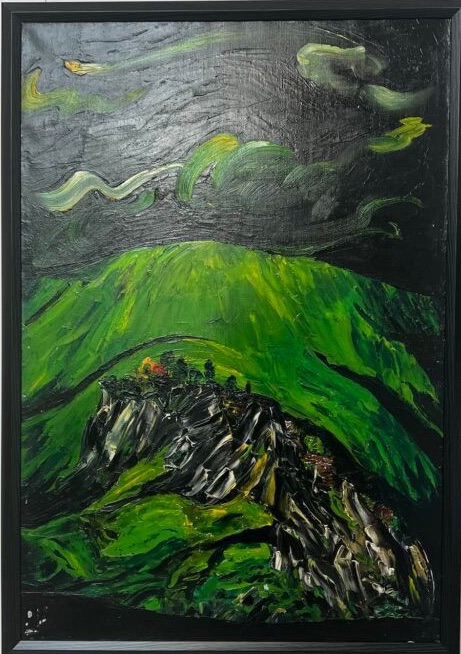
From there, a roll call of names I’d never heard before this morning and will never forget:
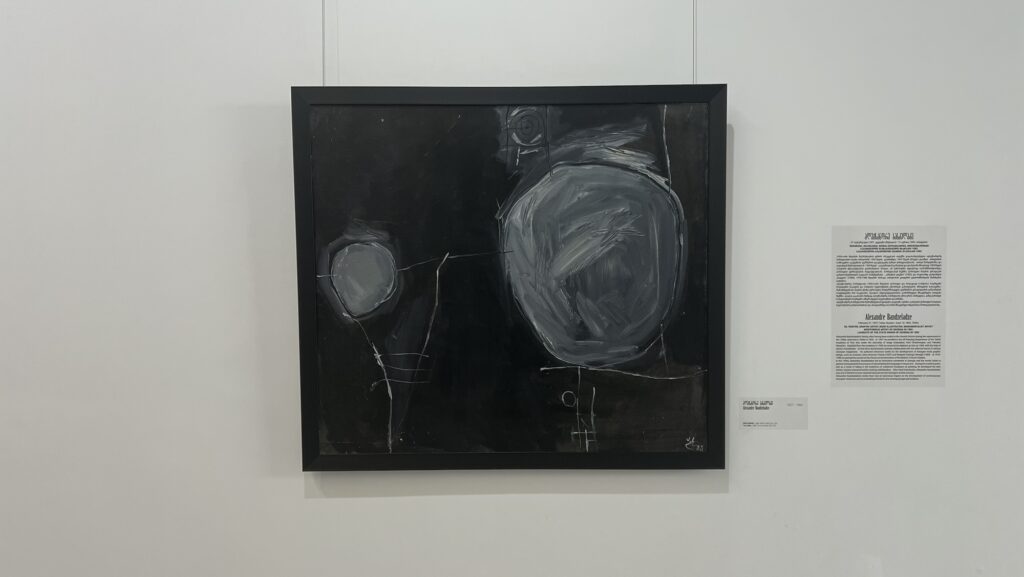
Alexandre Bandzeladze (1927–1992) — dark orbs, planets of pigment floating in black space.
Apolon Kutateladze (1899–1972) — florals rendered with a precision that makes you lean in, then step back, then lean in again.
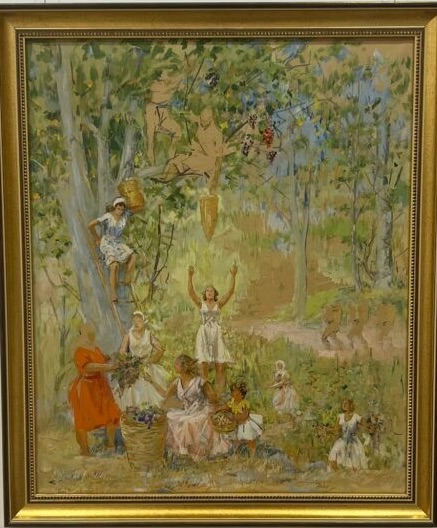
Ketevan Magalashvili (1894–1973) — portraits with sadness in the eyes. These are not sad people performing sadness. These are pained souls who happen to be sitting for a portrait.
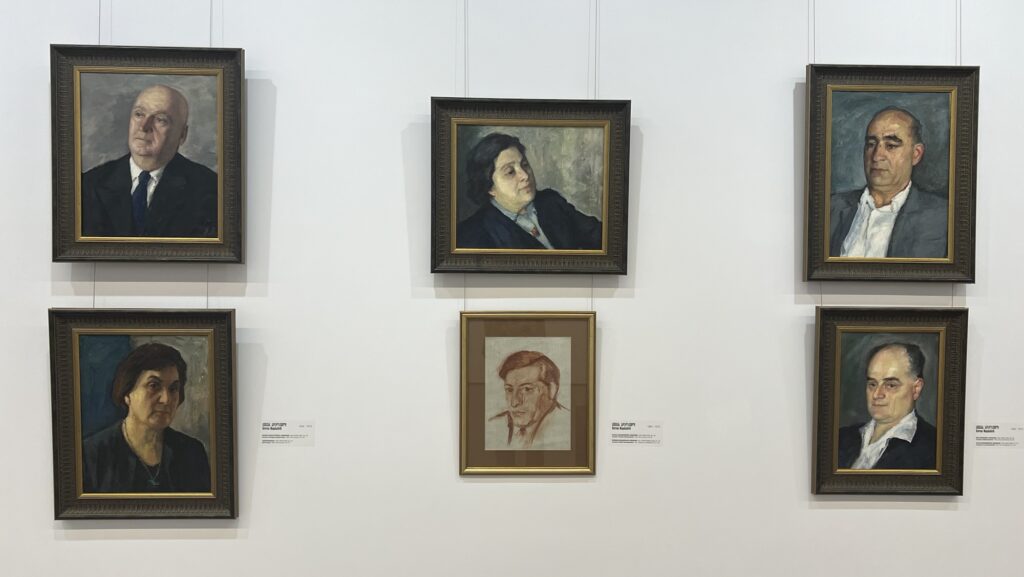
Edmond Kalandadze (1923–2014) might be the discovery of the day. Born in Guria, drafted into World War II, fought on the front line until 1944, returned to Tbilisi with a severe concussion. At the Academy of Fine Arts, his graduation work was rejected — twice. He was held back a year four times for his “formalist explorations.” He never joined the Komsomol. And then, after Stalin died, he became one of the leading figures of what is known as the 1950s generation — artists who outright rejected Socialist Realism’s moderation in colorfulness, its academic manner, its collectivist-proletarian themes idealizing the leader’s cult of personality.
To some extent, a peculiar kind of color revolution took over in Georgia’s visual arts.
— Georgia Museum of Fine Arts, Kalandadze wall text
Kalandadze became Minister of Culture in 1991–92. He lived to 91. His paintings — expressive color stains, intense strokes, impasto texture — bring Western Modernism into Georgian space: Impressionism, Postimpressionism, Fauvism, all harmonized with Georgian polyphony, epic narrative, the national spirit. I find myself standing in front of one canvas for a long time, trying to absorb how much history — artistic and political — is packed into a single brushstroke.

The parade continues:
Zurab Nizharadze (1928–2021) — blurred paintings with vivid colors. Shapes and forms are visible but clarity is withheld. There is haze, but there is also hope. You can see enough to know what you’re looking at, but not enough to be certain. The ambiguity is the point.
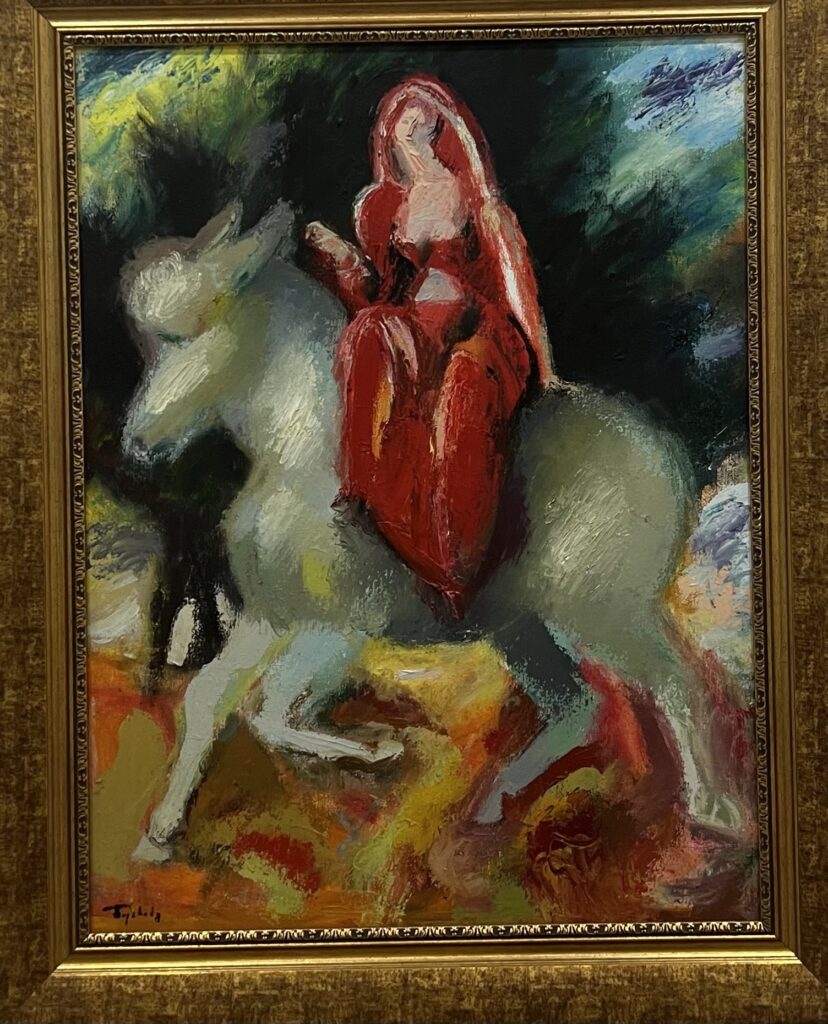
Levan Tsutskiridze (1926–2021) — The Tiger and the Night. A single painting, a single image, and it burns itself into memory. The tiger, the darkness, the tension between predator and void.
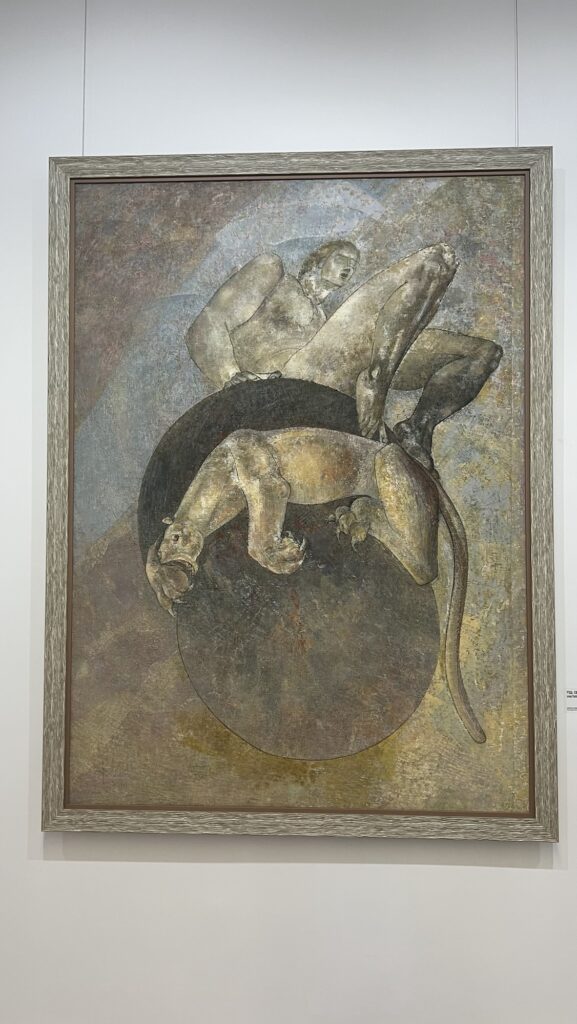
Otar Chkhartishvili (1938–2006) — war against a city backdrop.
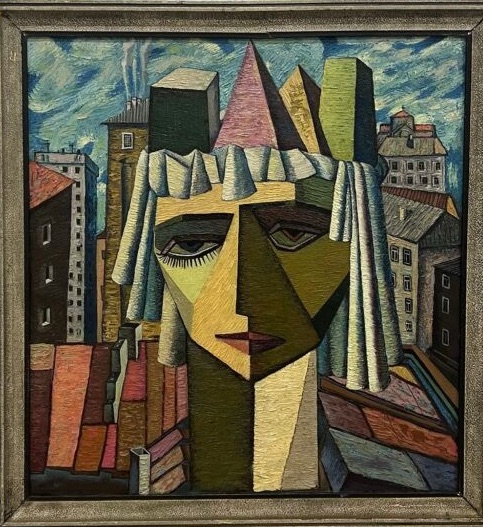
Esma Oniani (1938–1999) — canvases drenched in red and orange hues, the color of embers, of anger, of Georgian earth.

Vladimir Kandelaki, Dimitri Eristavi (1931–2021) with his delicate pencil work, Zaal Bachanashvili and his chaos. Shalva Matuashvili — two paintings placed in deliberate contrast, light against dark, a visual argument about duality.

Khuta Iremadze (1952–2003).
After an hour and a half, hunger took me out of the museum. Not gently. The body doesn’t care about art history when it hasn’t been fed.
👅 Palate — Charru Grill & Restaurant
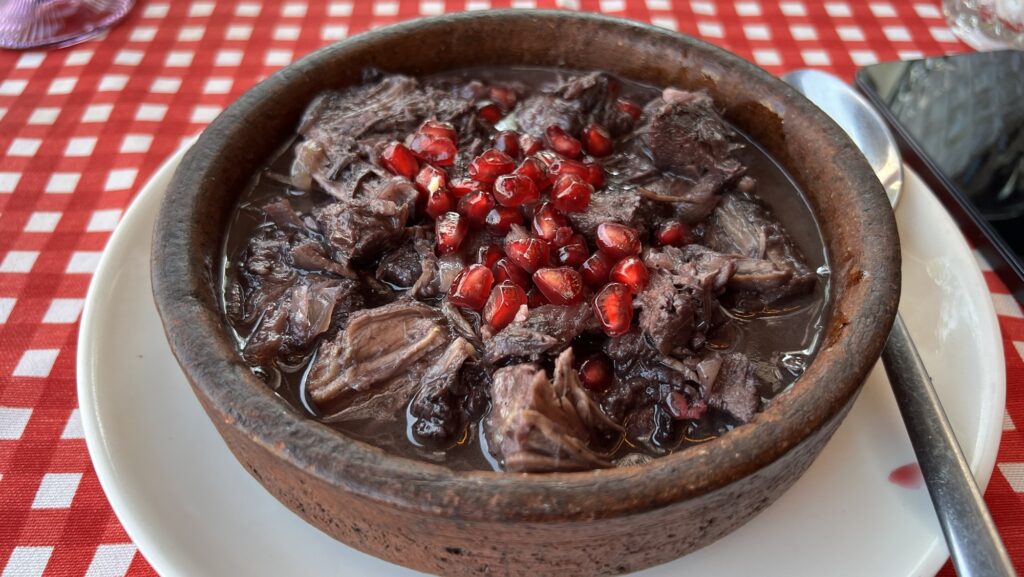
50 GEL. I ordered the Qalia, a beef stew slow-cooked with pomegranate seeds — a Georgian dish that sits somewhere between a curry and a tagine, rich and deep and studded with bursts of tart sweetness from the seeds. It was excellent and impossibly filling. I managed about half. The server looked at my plate with the expression of someone who has seen this before: a foreigner underestimating Georgian portions.
After lunch, a brief detour to the Galleria mall for socks. Every pair I brought on this European adventure has developed holes in the soles. Too much walking, or poor quality, or both. When you’ve been on the road for nearly two months, sock attrition becomes a real logistics problem. Two new pairs. 10 GEL. Moving on.
🧭 Wander — What the Art Told Me
At lunch, I sat with what I’d just consumed — not the qalia, the art. Three and a half hours of Georgian painting, from Pirosmani’s oilcloth feasts to Iankoshvili’s neon explosions to Kalandadze’s post-Stalinist color revolution. And gradually, a thought surfaced.
The way a person speaks tells you about their education. What and how they eat tells you about their family upbringing. The music they listen to gives you context for who they are. The way artists express themselves — and the way subsequent generations admire and display that art — tells you about the inner psyche of a people.
Georgian art surprised me. The Museum of Fine Arts is, I’ll say it again, the world’s hidden gem — an absurdly underrated collection that would draw crowds in Paris or New York but sits quiet and nearly empty on a Tbilisi side street. The art is beyond amazing not because it’s technically perfect, but because it tells stories and shouts emotions. Chaos. Sadness. Darkness. Moments of enlightenment. Glimmers of hope. Wandering. Exultation. The full register of human feeling, but played in a minor key.
Back in Bratislava, I wrote about the possibility that generational trauma transfers through genetic expression — that if negative traits like alcoholism and drug addiction can be passed down, then perhaps the psychic weight of historical experience is passed down too, manifesting in ways that include artistic expression. (I am not a scientist. But I am a close observer of what humans make.)
What does Georgian art tell me about psychic trauma? To answer that, you need to understand what Georgia has been through.
🧭 Wander — A Brief History of Georgia, 1850–Present
By 1850, Georgia had already been absorbed into the Russian Empire — a gradual annexation that began in 1801. For the next seven decades, imperial authorities tried to integrate Georgia culturally and administratively. At the same time, a modern Georgian national movement emerged. Intellectuals like Ilia Chavchavadze fought to preserve the Georgian language, literature, and identity against the imperial pressure to dissolve into Russianness.
Then came the revolutions. In 1917, the Russian Empire collapsed. Georgia declared independence in May 1918 — the Democratic Republic of Georgia, governed mainly by Mensheviks, attempting to build a parliamentary democracy while surrounded by larger and hungrier powers. It lasted less than three years. In February–March 1921, the Red Army invaded. Georgia became a Soviet republic.
And then — Stalin. Joseph Stalin was Georgian, born in Gori. The complicated relationship between Georgia and its most infamous son runs through everything that followed. Under Stalin, Georgia experienced forced collectivization, political repression, executions, and purges alongside industrialization and expanded Soviet infrastructure. The man who terrorized the Soviet Union came from here. Imagine carrying that. Imagine it showing up in your art.
After Stalin’s death in 1953, repression decreased. Georgia became one of the more prosperous Soviet republics, though corruption and a large shadow economy flourished. Georgian nationalism never died — in 1978, massive demonstrations in Tbilisi successfully blocked an attempt to weaken the official status of the Georgian language. Then came Gorbachev’s reforms, growing independence movements, and on April 9, 1989, Soviet troops violently dispersed a peaceful pro-independence demonstration in Tbilisi, killing protesters. The event catalyzed the final push toward independence, formally restored on April 9, 1991.
What followed independence was not peace. The first years were violent chaos — a coup against President Gamsakhurdia, separatist wars in South Ossetia and Abkhazia, hundreds of thousands displaced, a broader civil conflict. Eduard Shevardnadze stabilized the country by the mid-1990s, but corruption and poverty persisted. In 2003, the Rose Revolution peacefully ousted him, and Mikheil Saakashvili’s government launched rapid reforms — slashing police corruption, rebuilding institutions, pursuing NATO and EU integration.
Then 2008. The Russo-Georgian War. Russian forces entered Georgian territory, defeated Georgian forces within days, and recognized Abkhazia and South Ossetia as independent states. Twenty percent of Georgia’s internationally recognized territory remains under Russian military occupation to this day.
Since then: democratic transfers of power, an Association Agreement with the EU, visa-free Schengen travel for Georgian citizens, ongoing political polarization, and the ever-present shadow of the neighbor to the north. In 2019, massive protests erupted when a Russian politician addressed parliament from the speaker’s chair — for many Georgians, the symbolic violation was as visceral as the military one.
🧭 Wander — The Inner Psyche of a People
Now look at the paintings again.
Pirosmani painting weddings and feasts on black oilcloth — celebrations rendered in darkness, using the cheapest possible material. Iankoshvili’s neon greens screaming off the canvas — the color of a generation that refused to be muted. Kalandadze, concussed from war, having his graduation work rejected twice, held back four years for “formalism,” and then becoming the Minister of Culture — his entire biography is a painting about resilience. Magalashvili’s portraits with sadness in the eyes. Chkhartishvili’s war against a city backdrop. Oniani’s reds and oranges — embers, anger, earth. Nizharadze’s haze-with-hope — the ambiguity of a nation that can see enough to know where it wants to go but not enough to be certain it will get there.
This is not art about pretty landscapes. This is art made by people whose grandparents lived through imperial absorption, whose parents lived through Soviet purges, who themselves lived through the collapse of one empire and the shadow of another, through independence wars and Russian invasions, through revolution and counter-revolution, through the constant negotiation between being Georgian and being occupied. The art does not whine about any of this. It doesn’t need to. It’s all there in the brushstrokes.
Sadly and joyfully, I had the whole museum to myself. The art of a nation that has endured more history than most, sitting in a building on a Tuesday morning, waiting for someone to come look. I’m glad I skipped breakfast for it.
By the Numbers
| Item | Local | EUR |
|---|---|---|
| Georgian National Museum — admission | 25 GEL | ≈ €8.50 |
| Georgia Museum of Fine Arts — admission | 40 GEL | ≈ €13.60 |
| Charru Grill & Restaurant — Qalia (beef stew) | 50 GEL | ≈ €17.00 |
| Socks — two pairs (Galleria mall) | 10 GEL | ≈ €3.40 |
| Day Total | 125 GEL | ≈ €42.50 |
Two museums, one lunch, two pairs of socks, and three and a half hours of art that rewired my understanding of what a nation carries in its brushstrokes. A full Tbilisi Day 2 for about the price of two cocktails at a mid-range Chicago bar. Georgia continues to deliver.
Leave a Reply